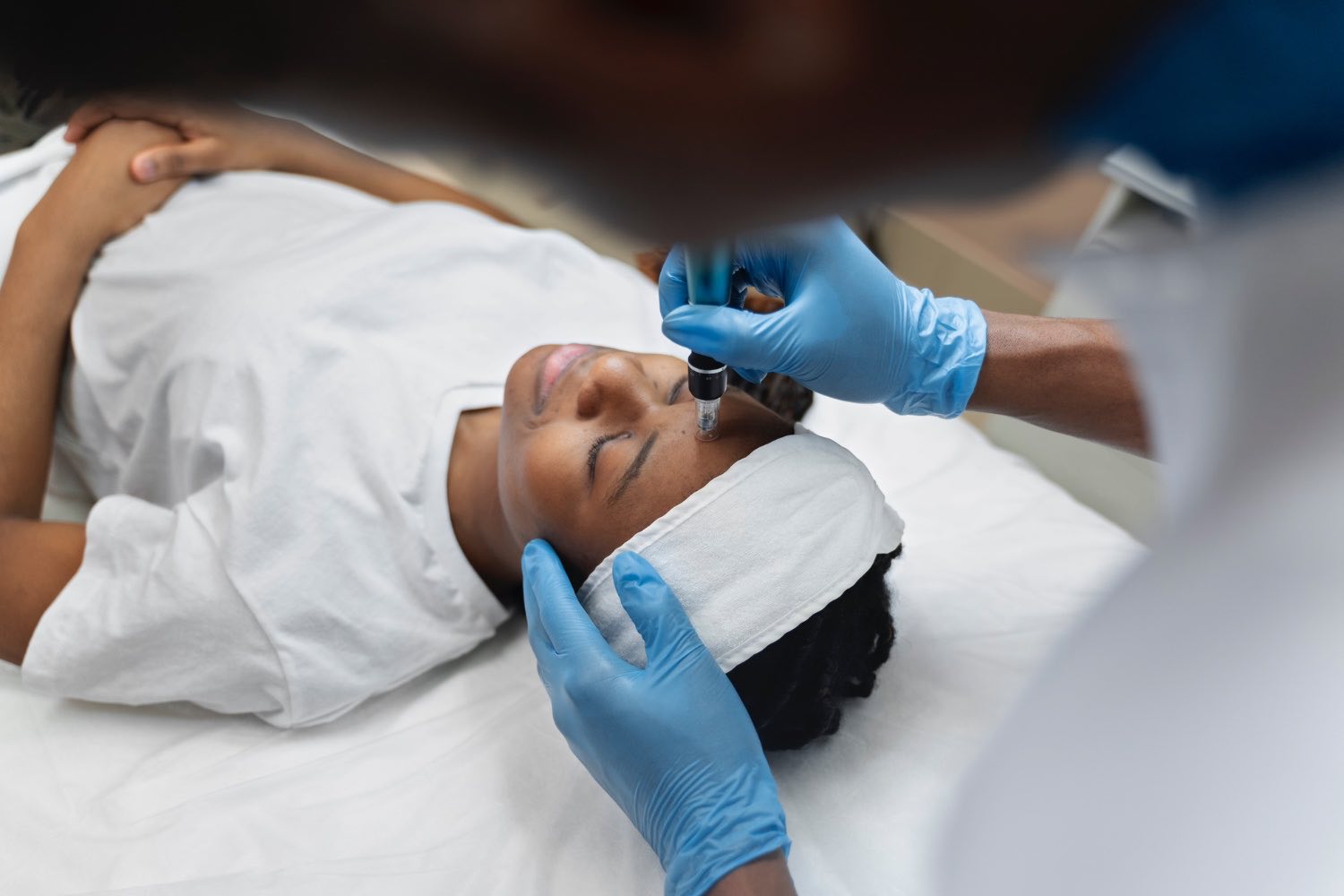
QUICK ANSWER Botox is a brand of botulinum toxin type A, a prescription medicine that temporarily reduces the activity of selected...

If You Have Diabetes in Ghana, Your Eyes Are Already at Risk: Here’s What to Do Before It’s Too Late
If you are living with diabetes in Ghana, there is something your doctor may not have told you yet: diabetes does not just affect your blood sugar. It quietly, steadily damages the blood vessels at the back of your eyes, and by the time you notice anything wrong with your vision, the damage may already be advanced.
This condition is called diabetic retinopathy, and it is the leading cause of blindness among working-age adults worldwide. In Ghana, where diabetes prevalence has risen from 0.2% in 1964 to over 6% today, the number of people at risk of losing their sight to this disease is growing every year — often without them knowing it.
Research from Accra and Kumasi has shown that approximately 18% of Ghanaians with type 2 diabetes already have diabetic retinopathy at the time of their first eye examination. Most of them had no symptoms at all.
This article explains exactly what diabetic retinopathy is, how it progresses through specific stages, what treatment looks like at a specialist eye hospital in Ghana, and what you need to do — starting today — to protect your sight.
How Do I Know If My Diabetes Has Already Damaged My Eyes, and Does It Feel Like Anything?
This is perhaps the most important thing to understand about diabetic retinopathy: in its early stages, it feels like absolutely nothing. There is no pain. There is no blurring. There is no redness.
Your vision may feel perfectly normal while the blood vessels inside your retina — the thin layer of tissue at the back of your eye that captures light and sends images to your brain — are already leaking, swelling, or closing off.
That is why the World Health Organisation and every major ophthalmology body in the world recommends that every person with diabetes should have a dilated eye examination at least once every year, even if their vision feels fine.

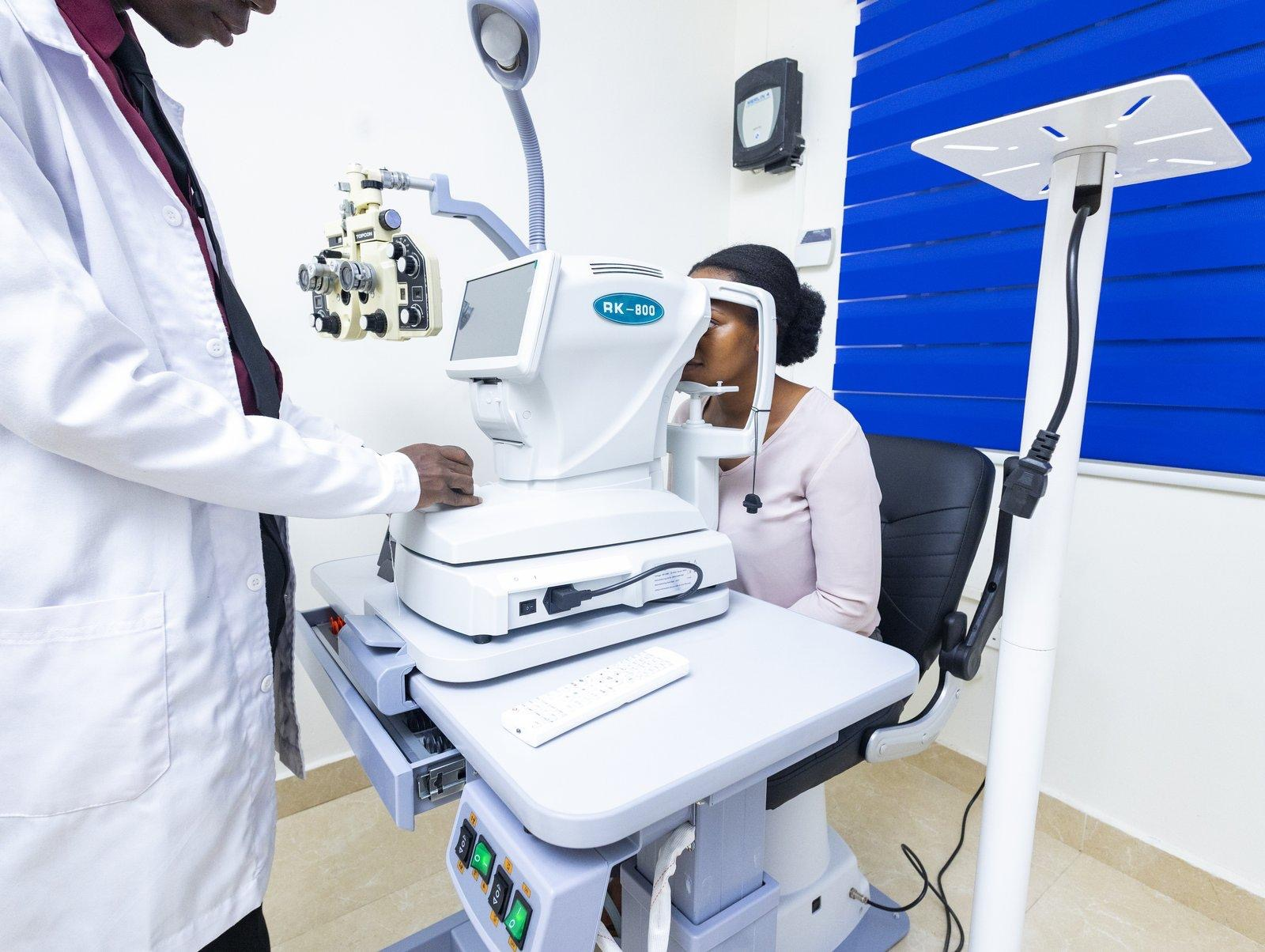
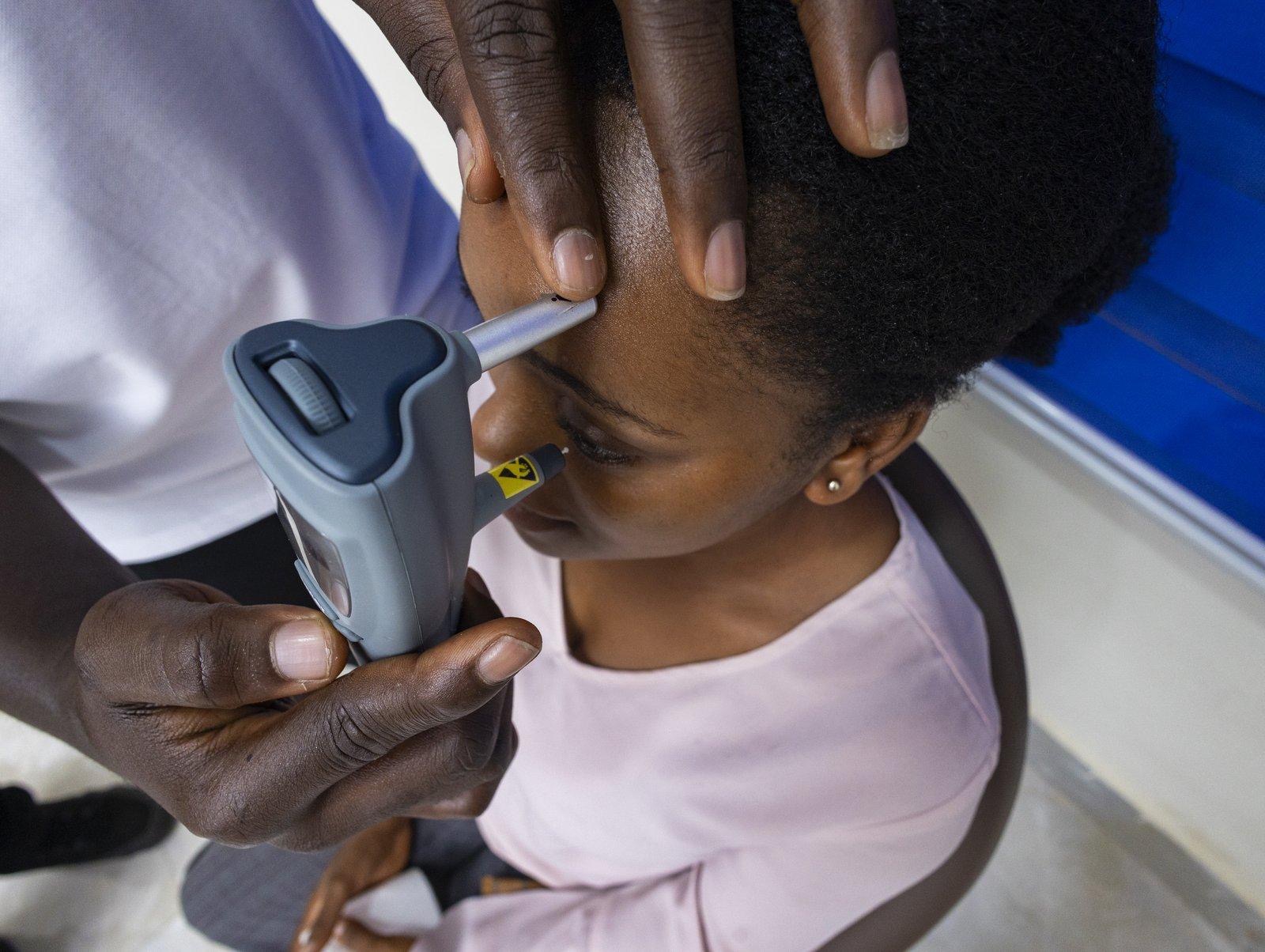
A dilated eye examination is different from a routine eye test. At St. Thomas Eye Hospital, we use fundus photography, OCT (optical coherence tomography), and fundus fluorescein angiography (FFA) to capture detailed images of the retina.
These tools allow us to detect microaneurysms — tiny bulges in retinal blood vessels — that are invisible to the naked eye and impossible to feel. You can view our full range of imaging and diagnostic services here.
At What Stage of Diabetic Retinopathy Does Treatment Become Urgent, and When Is It Too Late to Save Vision?
Diabetic retinopathy progresses through four clinically defined stages. Understanding where you are on this spectrum is critical, because the earlier treatment begins, the more vision can be preserved.
Stage 1: Mild Non-Proliferative Diabetic Retinopathy (NPDR)
Small areas of swelling (microaneurysms) appear in the retinal blood vessels. There are no symptoms, and no treatment is needed yet — but this is the stage where annual monitoring becomes essential.
If your blood sugar, blood pressure, and cholesterol are well controlled at this point, progression can often be slowed or even halted.
Stage 2: Moderate NPDR
Blood vessels that nourish the retina begin to swell and distort. Some may lose their ability to carry blood to the retina. There are still usually no symptoms, but the risk of progression is increasing.
Stage 3: Severe NPDR
More blood vessels are blocked, depriving large areas of the retina of their blood supply. The retina sends distress signals to the body to grow new blood vessels. At this stage, treatment is becoming urgent. Without intervention, the disease is very likely to progress to the most dangerous stage.
Stage 4: Proliferative Diabetic Retinopathy (PDR)
The retina begins growing new, abnormal blood vessels (a process called neovascularisation). These new vessels are fragile. They leak blood into the vitreous — the clear gel inside the eye — causing sudden floaters, blurred vision, or even sudden vision loss. At this stage, the risk of retinal detachment is real and immediate. Emergency laser or surgical treatment is needed.
Is it ever too late? If caught at stages 1–3, vision can almost always be preserved with proper treatment and blood sugar control. Even at stage 4, laser surgery and vitrectomy can stabilise vision and prevent total blindness, but the damage already done cannot be fully reversed. That is why early detection is everything.

What Does a Retinal Laser (PRP) Treatment Involve at an Eye Hospital in Ghana, and Will It Hurt?
Pan-retinal photocoagulation — known as PRP laser treatment — is the standard procedure for treating severe non-proliferative and proliferative diabetic retinopathy.
At St. Thomas Eye Hospital, PRP is performed by Dr. Michael Gyasi, a fellowship-trained vitreoretinal surgeon, using specialised laser surgical equipment at our Mataheko Surgical Centre.
Here is what the procedure involves:
Before the procedure: Your pupil is dilated with eye drops. Anaesthetic drops are applied to numb the surface of the eye. The entire preparation takes about 20–30 minutes.
During the procedure: A special contact lens is placed on the eye. The surgeon delivers hundreds of small, focused laser burns to the peripheral retina. These burns reduce the retina’s oxygen demand, which stops the growth of dangerous new blood vessels. Each session takes approximately 15–20 minutes. PRP is usually completed over two to three sessions, spaced one to two weeks apart.
Does it hurt? Most patients describe a mild stinging or pricking sensation during the laser pulses, but it is generally well tolerated. Some patients feel no discomfort at all. After the procedure, your vision may be blurry for several hours, and you should not drive yourself home.
After the procedure: You will be given follow-up instructions and scheduled for your next session. Most patients can return to normal activities the following day, though bright sunlight may feel uncomfortable for 24–48 hours. We recommend wearing dark sunglasses outdoors.
Is Diabetic Eye Screening Covered by NHIA in Ghana, and How Often Should I Go?
The National Health Insurance Authority (NHIA) covers general ophthalmology consultations and certain diagnostic services at accredited eye care facilities in Ghana. St. Thomas Eye Hospital is an NHIA-accredited facility across all four branches — Mataheko, Osu, Tema, and Kumasi.
However, it is important to understand that coverage for advanced diagnostic imaging (such as OCT and FFA) and for treatment procedures (such as laser photocoagulation and intravitreal injections) may not be fully covered under the basic NHIA package.
We recommend contacting our appointments team to confirm what is covered under your specific insurance plan before your visit.
How often should you go?
If you have been diagnosed with diabetes — whether type 1 or type 2 — you should have a comprehensive dilated eye examination at least once every 12 months. If diabetic retinopathy is already present, your ophthalmologist may recommend more frequent monitoring — every three to six months — depending on the stage.
Diabetes also significantly accelerates the development of cataracts. If you are a diabetic patient who has noticed a gradual clouding of your vision, read our guide: Cataract Surgery in Ghana: What Patients Ask Most, Answered by Eye Specialists.
Can My Vision Be Restored After Diabetic Retinopathy, or Can Doctors Only Stop It from Getting Worse?
This is a question we hear frequently at St. Thomas Eye Hospital, and the honest answer depends on how early treatment begins.
If caught early (stages 1–2): With good blood sugar control, blood pressure management, and regular monitoring, progression can be stopped or significantly slowed. Vision is typically preserved in full.
If caught at stage 3 (severe NPDR): Laser treatment and anti-VEGF injections can prevent further damage and, in some cases, improve vision. However, any retinal tissue that has already been destroyed by oxygen starvation cannot regenerate.
If caught at stage 4 (PDR) with complications: Vitrectomy surgery can remove blood from the vitreous and repair retinal detachments, often stabilising or partially restoring vision. But the window for intervention narrows with every week of delay.
The single most important thing you can do as a diabetic patient in Ghana is schedule your first dilated eye examination now — do not wait for symptoms. If your last eye check was more than 12 months ago, book an appointment at St. Thomas Eye Hospital today.
What to Do Now: Your Next Steps
1. Book a dilated eye examination. Even if your vision feels fine. Visit our contact page or call any of our branches directly. We have specialist ophthalmologists at Mataheko, Osu, Tema, and Kumasi.
2. Bring your diabetes records. Your most recent HbA1c result, fasting blood glucose, and any medications you are taking. This helps your ophthalmologist assess your overall risk.
3. Control what you can control. Work with your GP or endocrinologist to manage your blood sugar, blood pressure, and cholesterol. These three factors have the greatest impact on whether diabetic retinopathy progresses or stays stable.
4. Do not skip follow-up appointments. If your ophthalmologist has scheduled you for a repeat visit in three or six months, that interval is based on what they saw in your retina. Missing that appointment means missing the window where early intervention is most effective.
St. Thomas Eye Hospital is a specialist ophthalmology centre with branches in Mataheko (Accra), Osu (Accra), Tema, and Kumasi. Our vitreoretinal surgeon, Dr. Michael Gyasi, has international fellowship training in retinal surgery and performs PRP laser treatment, intravitreal injections, and vitrectomy at our Mataheko Surgical Centre. View all our services →
Related Reading on Our Blog
• Cataract Surgery in Ghana: What Patients Ask Most
• What Causes Floaters in the Eye? A Practical Guide
• Eye Drops, Laser, or Surgery? Understanding Your Glaucoma Treatment Options in Ghana
• 5 Things Most Ghanaians Get Wrong About Glaucoma

Dr. Michael E. Gyasi is the Medical Director and founder of St. Thomas Eye Hospital — a multi-branch specialist facility that introduced phacoemulsification cataract surgery and micro-incisional vitrectomy surgery to Ghana. Under his leadership, the hospital has delivered over 10,000 free sight restoration surgeries and screened more than 200,000 people for eye disease across the country.
Tags :