QUICK ANSWER Botox is a brand of botulinum toxin type A, a prescription medicine that temporarily reduces the activity of selected...
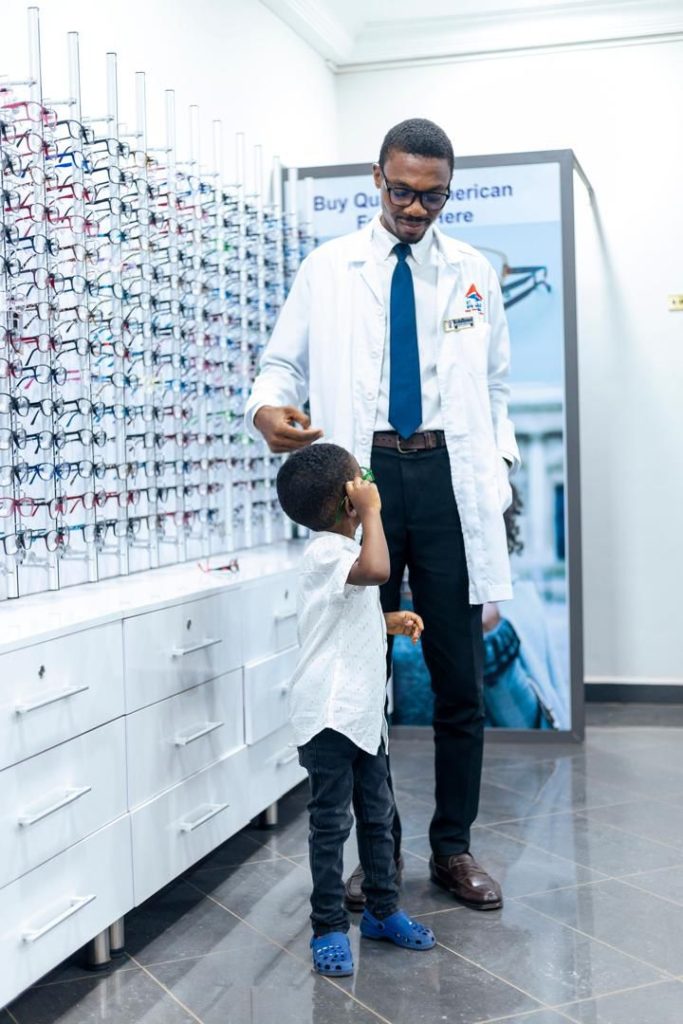
Children’s Eye Problems: What Ghanaian Parents Need to Know

Classroom learning depends on clear vision.
You take your child to school one morning, and the teacher pulls you aside after school and mentions that your son keeps squinting, or your daughter has been moving to the front of the classroom on her own.
For many Ghanaian parents, this is the first real signal that something might be wrong with their child’s eyes. Not because the child complained; children rarely complain about poor vision, because they have no frame of reference for what “normal” seeing looks like. They simply assume that the way they see is the way everyone sees.
The reality is that undetected vision problems are one of the most common and most treatable barriers to learning in Ghanaian schools. A 2025 study published in Investigative Ophthalmology & Visual Science (IOVS) found that among schoolchildren screened in the Kumasi metropolis, 34% had at least one ocular disorder — and the vast majority had never been seen by an eye care professional.
This article explains the four most common paediatric eye conditions we see at St. Thomas Eye Hospital, how a children’s eye examination works, what treatment is available, and why early action — ideally before age seven — is critical.
What Age Should a Child First Have an Eye Test in Ghana, and Why Do Most Parents Wait Too Long?
The American Academy of Ophthalmology recommends that every child should have their first comprehensive eye examination between the ages of three and five years, before they start primary school.
In Ghana, however, most children never see an ophthalmologist until a teacher or family member notices a visible problem, which often means the child has been struggling silently for years.
There are several reasons Ghanaian parents tend to delay:
The “they’ll grow out of it” assumption: Many parents believe that mild squinting or sitting close to the television is a phase. In some cases, it is. But in many others, these behaviours are the only visible signs of conditions like amblyopia (lazy eye) or significant refractive errors that will not resolve on their own — and that become harder to treat the longer they go unaddressed.
Limited awareness of paediatric eye care: Many parents are unaware that specialist children’s eye examinations exist, or that children’s eye tests are different from adult tests. At St. Thomas Eye Hospital, our ophthalmologists use age-appropriate techniques — picture charts, retinoscopy, and child-friendly examination rooms — to assess vision in children as young as three.
No mandatory school eye screening in Ghana: Unlike some countries that require a vision test before school enrolment, Ghana does not currently have a nationally mandated school eye screening programme. The Ghana Optometric Association has publicly called for mandatory pre-school vision testing, but as of 2026, this remains a policy gap. Until it is addressed, the responsibility falls on parents to arrange testing independently.
My Child’s Eyes Look Straight to Me, but They Failed a School Eye Screening; What Does That Mean?
A school eye screening, where one exists, typically tests only visual acuity: how clearly a child can see letters or shapes at a set distance. A child can fail a screening for several reasons:
Refractive errors (myopia, hyperopia, or astigmatism) are the most common cause. The child’s eye is shaped in a way that prevents light from focusing correctly on the retina. Glasses or, in some cases, contact lenses correct this immediately.
These conditions are not diseases — they are optical imperfections that are extremely common and entirely correctable. Our optical services include paediatric refraction, spectacle fitting, and follow-up adjustments.
Amblyopia (lazy eye) is a more complex condition. One eye develops weaker connections to the brain than the other, usually because of an unequal refractive error or a childhood squint. The affected eye appears physically normal — it is the brain, not the eye, that is underperforming.
If amblyopia is not treated before the brain’s visual pathways finish developing (typically by age seven to nine), the vision loss becomes permanent.
A comprehensive eye examination at a specialist hospital can distinguish between these causes and determine the right treatment path.

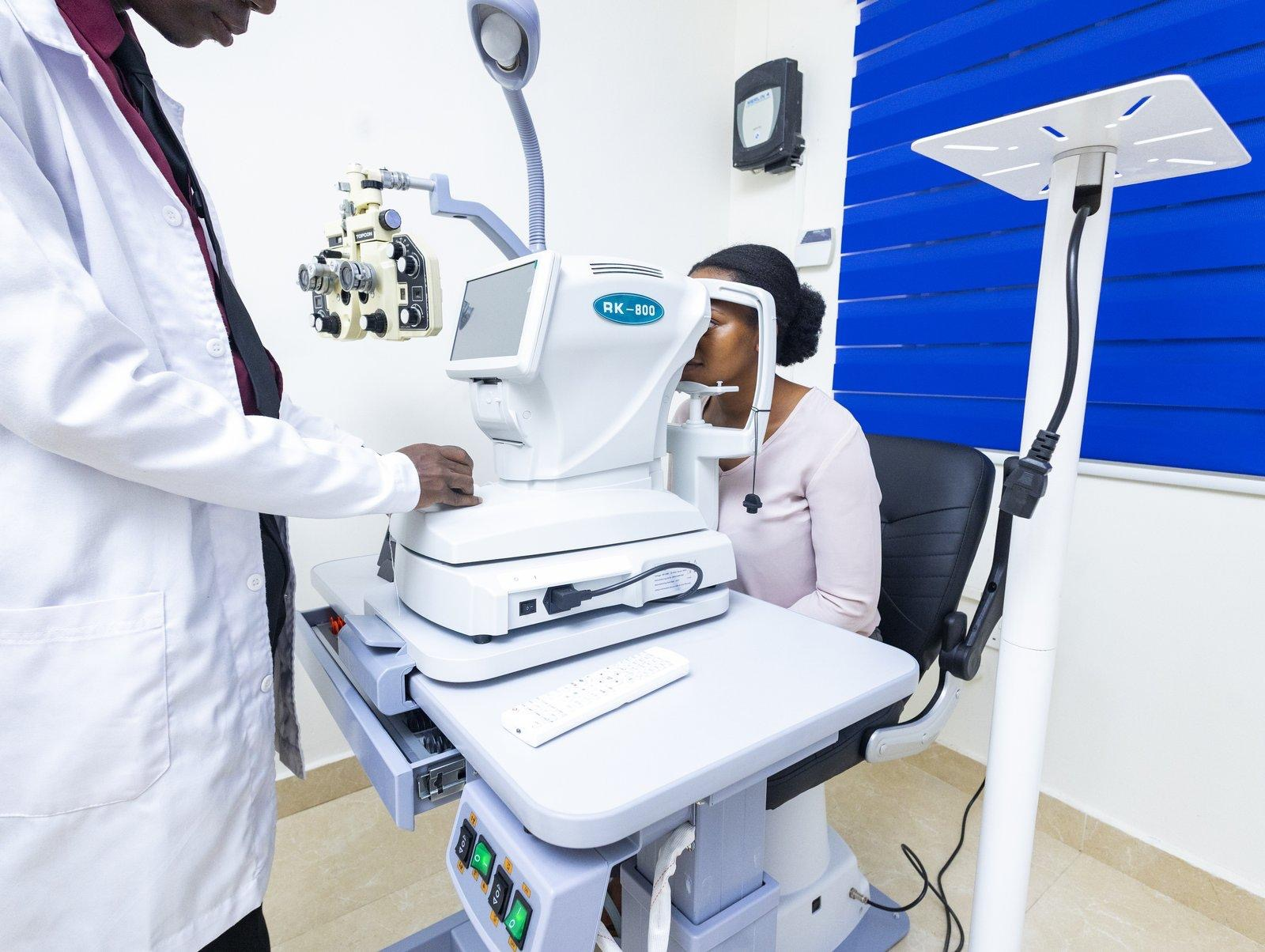
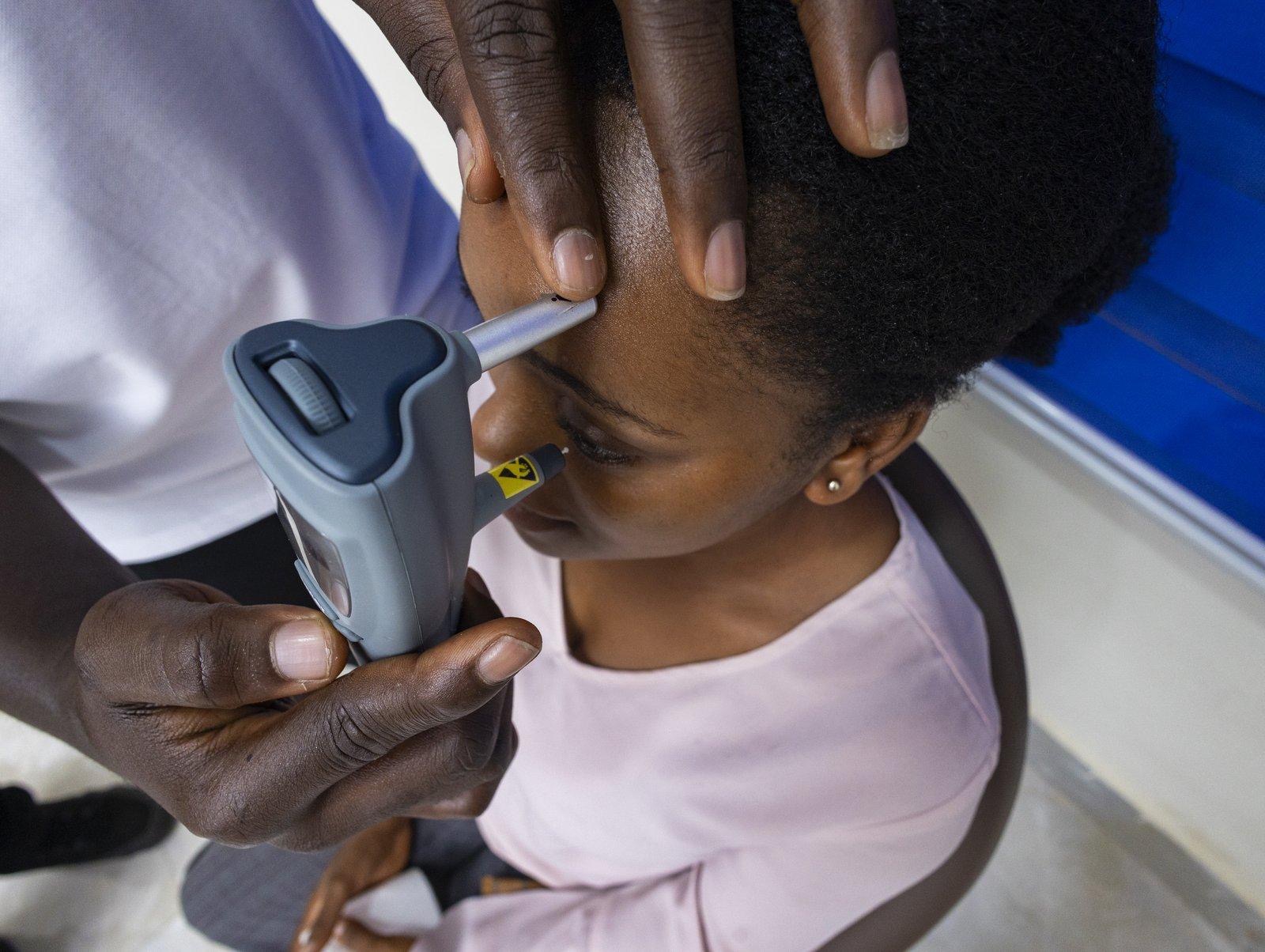
A paediatric eye examination uses child-friendly techniques to assess vision accurately.
Can a Lazy Eye (Amblyopia) Be Fully Corrected in a Ghanaian Child, and What Is the Treatment Like?
Yes — if treatment begins early enough. The critical window for treating amblyopia is generally before the age of seven, although some improvement can still be achieved in older children. The treatment is straightforward but requires parental commitment:
Step 1: Correct any refractive error. If the amblyopic eye has a significant prescription, the child is fitted with glasses first. This ensures that a clear image is reaching the retina.
Step 2: Patching or atropine drops. The stronger eye is covered with an adhesive patch for a prescribed number of hours per day, forcing the brain to use and strengthen the weaker eye. In some cases, atropine drops are used instead of a patch — the drop blurs the vision in the stronger eye, achieving the same effect.
Step 3: Ongoing monitoring. The child’s progress is monitored every few weeks or months, with adjustments to patching time as the weaker eye improves. Treatment can take several months to over a year, but the results — when started early — are often excellent.
At St. Thomas Eye Hospital, we understand that getting a young child to wear a patch is not always easy. Our ophthalmologists work with parents to create practical, achievable patching schedules that fit into a Ghanaian school day and home life.
Is a Squinting Eye in a Child an Emergency, or Can It Wait?
It depends on how suddenly the squint appeared.
A gradual squint (one that has been present for weeks or months, or that comes and goes) is not an emergency, but it does require a proper evaluation within two to four weeks. Childhood strabismus (the clinical term for squinting or misaligned eyes) can cause amblyopia if left untreated, because the brain may begin to ignore the image from the misaligned eye.
A sudden squint in a child who previously had straight eyes — especially if accompanied by headaches, double vision, or a change in behaviour — should be assessed urgently. While most childhood squints are benign, a sudden onset can occasionally signal a more serious underlying condition that needs prompt investigation.
Treatment for strabismus may include glasses (if a refractive error is contributing), patching (if amblyopia has developed), or in some cases, surgical correction to realign the eye muscles. Surgery for childhood squint is a well-established, safe procedure performed under general anaesthesia.
If you have noticed a squint in your child, book a paediatric consultation at St. Thomas Eye Hospital. Our ophthalmologists see children at our Mataheko and Osu branches in Accra, and at our Kumasi branch for families in the Ashanti Region.
How Is a Children’s Eye Examination Different from an Adult Eye Test; What Should My Child Expect?
Many parents worry that their child won’t cooperate during an eye test, or that they are too young to participate. The good news is that a paediatric eye examination does not require the child to read letters or sit still for long periods.
At St. Thomas Eye Hospital, a children’s eye examination typically includes:
Visual acuity testing using age-appropriate charts. For children who cannot yet read, we use picture charts (LEA symbols) or matching games. For very young children (under three), we use objective techniques that do not require verbal responses.
Retinoscopy — a technique where the ophthalmologist shines a light into the eye and observes the reflection to measure the eye’s refractive error. This works even on babies and toddlers, and requires no cooperation from the child.
Cover-uncover test to detect strabismus (squint). The examiner covers each eye in turn while the child looks at a target, watching for any shift in the uncovered eye.
Anterior segment and fundus examination to check the health of the cornea, lens, and retina. In some cases, drops are used to dilate the pupil for a more thorough examination.
The entire examination takes approximately 30–45 minutes. We recommend scheduling your appointment for a time when your child is well-rested and fed — a tired or hungry child is a less cooperative child.
What Ghanaian Parents Should Do Now
If your child is aged three or older and has never had a comprehensive eye test: schedule one now, even if they are not showing symptoms. Early detection of conditions like amblyopia can make the difference between full correction and permanent vision loss.
If a teacher has raised concerns about your child’s vision: do not wait for the next school term. Book an appointment as soon as possible. What looks like a learning difficulty or poor concentration may be a treatable vision problem.
If your child already wears glasses: ensure they are re-examined every 12 months. Children’s eyes change rapidly, and an outdated prescription is almost as unhelpful as no glasses at all.
St. Thomas Eye Hospital provides specialist paediatric eye care at our Mataheko, Osu, Tema, and Kumasi branches. We see children of all ages, from infants to teenagers, and our team is experienced in making eye examinations comfortable and reassuring for young patients.
St. Thomas Eye Hospital offers clinical and paediatric consultations across four branches in Ghana. Dr. Daisy Asiamah and Dr. Akosua Mensah-Bonsu see paediatric patients at the Mataheko and Osu locations. View all our services →
Related Reading on Our Blog
• Contact Lenses vs. Glasses in Ghana: Which Is Right for You?
• Eye Care in Osu: What Residents Need to Know
• Eye Care in Mataheko: What Residents of Accra’s West Side Need to Know
• Is Blurry Vision Normal? Causes, Warning Signs, and When to Worry

Dr. Michael E. Gyasi is the Medical Director and founder of St. Thomas Eye Hospital — a multi-branch specialist facility that introduced phacoemulsification cataract surgery and micro-incisional vitrectomy surgery to Ghana. Under his leadership, the hospital has delivered over 10,000 free sight restoration surgeries and screened more than 200,000 people for eye disease across the country.
Tags :