QUICK ANSWER Botox is a brand of botulinum toxin type A, a prescription medicine that temporarily reduces the activity of selected...

Computer Vision Syndrome: Symptoms, Causes and How to Protect Your Eyes
QUICK ANSWER
Computer vision syndrome (CVS), also called digital eye strain, is a group of eye and vision problems caused by long periods of screen use. Common symptoms include tired or dry eyes, blurred vision, and headaches. It is not usually permanent, and most people find relief by adjusting their screen habits, correcting any underlying vision problem, and following the 20-20-20 rule.
Key takeaways
- CVS is caused by how your eyes work when staring at screens, not by the screen “damaging” your eyes.
- The most common signs are tired eyes, dryness, blurred vision, headaches, and neck or shoulder pain.
- Students and office workers are the most affected groups, and both are growing fast in Ghana.
- It is treatable and usually reversible, but an eye exam is the only way to rule out an underlying vision problem.

The reception and optical area at St. Thomas Eye Hospital. If screens are leaving your eyes tired, a proper eye exam is the first step.
If your eyes feel tired, dry, or achy after a long day at the computer, you are not imagining it. That heavy, strained feeling has a name: computer vision syndrome. And in a country where more of us work, study, and scroll on screens every year, it is becoming one of the most common eye complaints we see.
The good news is that it is manageable, and in most cases fully reversible. In this guide we will explain what computer vision syndrome is, the symptoms to look out for, who is most at risk, whether it can be cured, and the simple steps you can take today to protect your eyes.
What Is Computer Vision Syndrome?
Computer vision syndrome (CVS), also known as digital eye strain, is a group of eye and vision-related problems that result from prolonged use of digital screens such as computers, tablets, phones, and e-readers. The American Optometric Association describes it as the eye discomfort and vision problems many people feel during or after extended screen time.
Here is what is actually happening. Reading text on a screen is harder work for your eyes than reading print. Screen characters have less contrast and less defined edges, there is often glare and reflection, and we tend to blink far less when we stare at a screen.
Your eyes have to focus and refocus constantly, and the muscles that do that job simply get tired, much like any other muscle you overuse.
One important point to clear up early: for most people, screens do not cause permanent damage to the eyes. CVS is about strain and fatigue, not injury. That said, the symptoms are real, they can affect your work and study, and they can point to an underlying vision problem worth checking.
Symptoms of Computer Vision Syndrome

Computer vision syndrome symptoms usually appear during or shortly after screen use and tend to get worse the longer you stare. They fall into a few groups.
Eye-related symptoms
- Tired, sore, or aching eyes
- Dry, burning, or gritty eyes
- Watery or irritated eyes
- Blurred or double vision
- Sensitivity to light
Whole-body symptoms
- Headaches, often across the forehead
- Neck, shoulder, and back pain
- Difficulty refocusing between your screen and distant objects
Most of these symptoms are temporary and ease once you rest your eyes. But if you notice them again and again, or if the blurred vision starts to linger after you stop working, that is your body telling you to take action rather than push through.
What Causes Computer Vision Syndrome?
CVS rarely comes down to a single cause. It is usually a combination of how you use your screen and how your eyes are working underneath. The main contributors are:
- Prolonged screen time without breaks, which keeps the focusing muscles working non-stop.
- Reduced blinking. We blink up to two-thirds less when looking at a screen, which dries out the surface of the eye.
- Poor screen position, lighting, and glare, which force your eyes and neck into an uncomfortable working posture.
- Uncorrected vision problems. Long-sightedness, astigmatism, or the natural age-related focusing change called presbyopia all make your eyes work harder at a screen. Even a small, uncorrected error can turn ordinary screen time into a daily strain.
That last point is why two people can do the same job on the same computer, and only one of them ends the day with sore eyes and a headache.
Who Is at Risk?
Anyone who spends two or more continuous hours a day on a screen can develop computer vision syndrome. In Ghana, two groups stand out.
Office and remote workers. If your job runs on a laptop, you are likely looking at a screen for most of the working day. Studies suggest the average office worker now spends seven hours or more a day on a computer, and discomfort rises with the number of hours.
Students. With more learning happening online and on phones, students are heavily exposed. Research among university students has found that a large majority report digital eye strain symptoms, with headaches and temporary blurred vision among the most common complaints. Those who already wear glasses, or who hold devices very close, tend to feel it more.
People who already have an uncorrected refractive error, or dry eye, are also more likely to develop symptoms, and to feel them more intensely.
Can Computer Vision Syndrome Be Cured?
In most cases, yes. Computer vision syndrome is usually temporary and reversible. Because the symptoms come from strain and dryness rather than lasting damage, they typically settle once you rest your eyes and change the habits causing them.
The key word, though, is change. If nothing about your screen use or your vision correction changes, the symptoms will keep coming back, and can feel worse over time.
So the aim is not a one-off fix but a set of small, lasting adjustments, and where needed, correcting any underlying vision problem with the right glasses. That is where a proper eye exam makes the difference between temporary relief and a permanent solution.

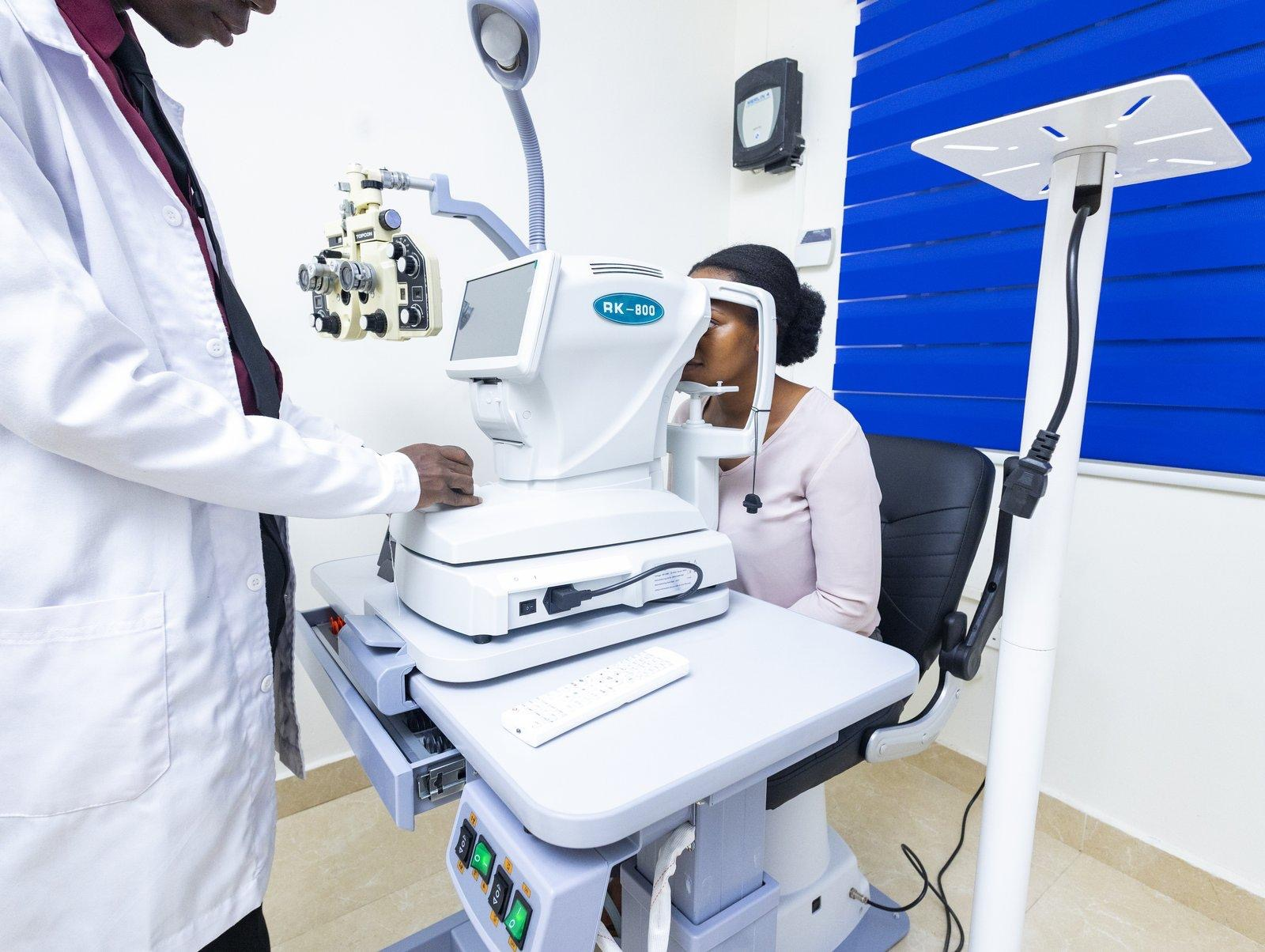
A comprehensive eye exam checks for the underlying vision problems that quietly make screen strain worse. Correcting them is often the missing piece.
Treatment and Prevention Tips
Computer vision syndrome treatment is mostly about smart habits and the right setup. Here are the changes that work, starting with the simplest.
- Follow the 20-20-20 rule. Every 20 minutes, look at something about 20 feet (6 metres) away for at least 20 seconds. This lets your focusing muscles relax. It is the single most widely recommended habit for screen users, and it costs nothing.
- Take real breaks. Beyond the 20-20-20 rule, step away from the screen for a few minutes after every couple of hours of continuous work. Your eyes, neck, and back will all thank you.
- Blink, on purpose. Since we blink less at screens, make a conscious effort to blink fully and often. If your eyes still feel dry, lubricating eye drops (artificial tears) can help. Ask us which type suits you.
- Fix your screen setup. Position the top of your screen at or just below eye level, about an arm’s length (50 to 70 cm) from your eyes, tilted slightly back. This keeps your gaze angled gently downward, which is more comfortable and helps your eyes stay moist.
- Control light and glare. Reduce glare from windows and overhead lights, and match your screen brightness to the room. Bump up text size and contrast so your eyes are not straining to read small, faint characters.
- Get the right glasses. If you have an uncorrected vision problem, correcting it is often the biggest single improvement. For some people who work at screens all day, dedicated computer glasses set for screen distance make a real difference.
A quick word on blue-light glasses, since they are heavily marketed. The current evidence that blue-light-filtering lenses reduce eye strain is mixed and far from settled, so we would not rely on them as your main solution. The habits above, and correcting your actual prescription, do far more for comfort.
When to See an Eye Doctor
Most screen strain eases with the steps above. But you should book an eye exam if:
- Your symptoms keep coming back despite better screen habits.
- Blurred vision, headaches, or eye pain continue after you stop using screens.
- You have not had an eye test in over a year, especially if you work at a screen daily.
- You notice persistent double vision, which should always be checked by a professional. Read more in our guide to squint and double vision.
A comprehensive eye exam does more than update your prescription. It checks the health of your eyes, measures your eye pressure, and rules out other conditions that can hide behind everyday eye strain. In other words, it tells you whether screens are the whole story, or only part of it.

Diagnostic testing at our Tema branch. A full eye exam confirms whether screen use alone explains your symptoms, or whether something else needs attention.
Protect Your Eyes at St. Thomas Eye Hospital
At St. Thomas Eye Hospital, we help office workers, students, and screen-heavy professionals get to the bottom of tired, strained eyes. A comprehensive eye exam at any of our branches in Mataheko, Osu, Tema, and Kumasi will identify any underlying vision problem, check the overall health of your eyes, and give you a clear, personal plan to keep them comfortable at the screen.
If digital eye strain is part of your daily routine, do not simply live with it. A short appointment can make your working day considerably more comfortable.
Book an eye exam at St. Thomas Eye Hospital →
Frequently Asked Questions
What is computer vision syndrome in simple terms?
It is eye discomfort and vision problems caused by long periods of screen use. The eyes get tired from constant focusing and from blinking less, which leads to symptoms like tired eyes, dryness, blurred vision, and headaches. It is also called digital eye strain.
What are the main symptoms of computer vision syndrome?
The most common symptoms are tired or sore eyes, dry or burning eyes, blurred or double vision, sensitivity to light, headaches, and neck or shoulder pain. Symptoms usually appear during or just after screen use and ease with rest.
Can computer vision syndrome be cured?
In most cases it is fully reversible. Symptoms usually settle once you rest your eyes and adjust your screen habits. Lasting relief comes from consistent good habits and from correcting any underlying vision problem, which is why an eye exam is worthwhile if symptoms keep returning.
Does computer vision syndrome cause permanent eye damage?
For most people, no. CVS is caused by strain and dryness rather than injury, so it does not usually cause permanent damage. Ongoing symptoms are still worth checking, as they can signal an uncorrected vision problem.
Do blue-light glasses help with computer vision syndrome?
The evidence is mixed and not conclusive. Blue-light lenses are unlikely to be a complete solution on their own. Good screen habits, the 20-20-20 rule, and correcting your actual prescription tend to help far more.
How does the 20-20-20 rule work?
Every 20 minutes, look at something about 20 feet (6 metres) away for at least 20 seconds. This gives your eye-focusing muscles a regular chance to relax during screen work.
How often should I have an eye exam if I work at a screen all day?
At least once a year is a sensible guide for daily screen users, or sooner if you notice recurring eye strain, blurred vision, or headaches.

Dr. Michael E. Gyasi is the Medical Director and founder of St. Thomas Eye Hospital — a multi-branch specialist facility that introduced phacoemulsification cataract surgery and micro-incisional vitrectomy surgery to Ghana. Under his leadership, the hospital has delivered over 10,000 free sight restoration surgeries and screened more than 200,000 people for eye disease across the country.
Tags :