QUICK ANSWER Botox is a brand of botulinum toxin type A, a prescription medicine that temporarily reduces the activity of selected...
Diabetes and the Eyes: How High Blood Sugar Affects Your Vision
QUICK ANSWER
High blood sugar can blur vision temporarily by changing fluid levels in the eye, and over time it can damage the retina’s blood vessels. Diabetes also raises the risk of cataract and glaucoma. The most dangerous changes may cause no early symptoms, so clear vision does not prove that the retina is healthy. Ghana’s national diabetes guideline recommends at least yearly eye screening for people with diabetes, with more frequent review when an eye-care professional finds disease or other risk factors.
Key takeaways
- A sudden change in blood glucose can temporarily change focus and cause blurred vision.
- Long-term vessel damage can cause diabetic retinopathy and diabetic macular oedema.
- Diabetes increases the chance of cataract and glaucoma, which require different tests and treatment.
- Early diabetic retinopathy can be completely silent.
- Regular dilated retinal examinations and management of blood glucose, blood pressure and cholesterol protect vision.

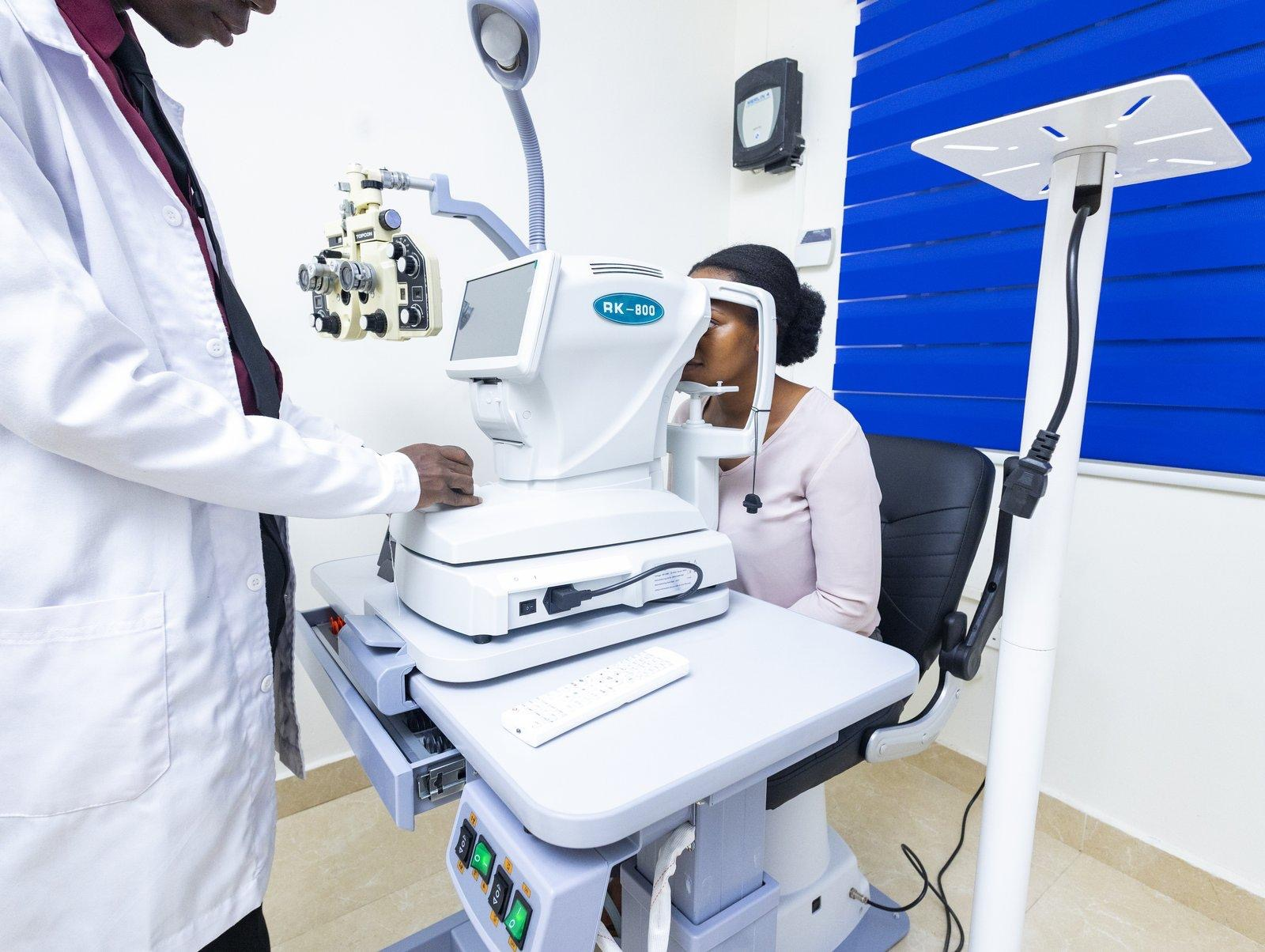
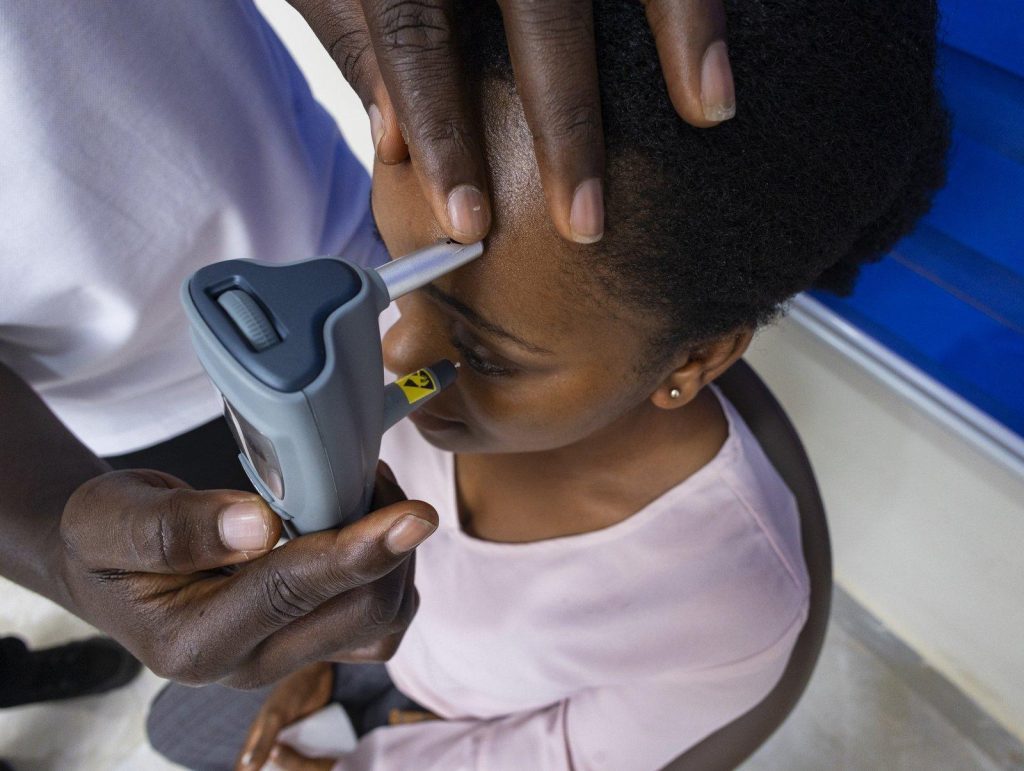
Optical coherence tomography can show swelling and structural changes in the retina that ordinary vision testing may miss.
How Diabetes Affects the Eyes
The eye depends on transparent tissues, precise focus and a healthy blood supply. Diabetes can disturb each of these in a different way. A short-term rise or fall in blood glucose can change fluid movement in the lens and temporarily alter focus.
Repeated or prolonged high glucose can damage small retinal vessels and the supporting nerve tissue. Other diabetes-related changes can accelerate clouding of the lens or affect pressure and drainage inside the eye.
This is why “diabetic eye disease” is a group of conditions rather than one diagnosis. The National Institute of Diabetes and Digestive and Kidney Diseases includes diabetic retinopathy, diabetic macular oedema, cataract and glaucoma among the important eye problems linked to diabetes.
Early Warning Signs
Many people expect eye disease to announce itself with pain or obvious blur. Diabetic retinopathy often does neither at first. A dilated retinal examination can detect small vessel changes before the patient notices them. When symptoms do occur, they may include:
- Vision that becomes blurred or changes from day to day.
- Difficulty reading, recognising faces or seeing fine detail.
- Dark spots, strings, cobwebs or a sudden increase in floaters.
- Flashes of light, a dark curtain or a missing area of vision.
- Colours that look faded or straight lines that appear wavy.
- Increasing glare, halos around lights or poor night vision.
These symptoms are not specific to diabetes. Cataract, retinal tear, glaucoma and other eye diseases can cause similar changes. New floaters, flashes, a curtain or sudden loss of vision needs urgent assessment.
Diabetic Eye Diseases Explained
| Condition | Main part affected | Typical pattern | How it is checked |
| Diabetic retinopathy | Retinal blood vessels | Often silent early; later blur, floaters or vision loss. | Dilated retinal examination and fundus photography. |
| Diabetic macular oedema | Macula at the centre of the retina | Blurred or distorted central vision; difficulty reading. | Optical coherence tomography and retinal examination. |
| Cataract | Natural lens | Gradual haze, glare, faded colour and poor night vision. | Visual acuity and slit lamp examination. |
| Glaucoma | Optic nerve, often with pressure or drainage problems | Usually silent until side vision is lost; some acute forms are painful. | Eye pressure, optic nerve examination, OCT and visual field testing. |
| Temporary refractive change | Lens focus during glucose fluctuation | Vision changes over days or weeks as glucose changes. | Refraction after medical assessment and more stable glucose. |
Diabetic retinopathy
Diabetic retinopathy begins when retinal vessels weaken, leak or close. Swelling can develop, and areas without enough oxygen may produce signals that trigger fragile new vessels.
These vessels can bleed into the vitreous gel; later scar tissue can pull the retina out of position. Read our diabetic retinopathy overview for Ghana for stages and symptoms. If treatment has been recommended, compare diabetic retinopathy treatment options in Ghana including injections, laser and vitrectomy.
Diabetic macular oedema
The macula provides the sharp central vision used for reading, driving and recognising faces. When damaged vessels leak fluid into it, central vision may blur or distort. Optical coherence tomography measures the swelling and helps the clinician judge response to treatment.
Cataract and glaucoma
A cataract clouds the natural lens and commonly causes gradual blur, glare and faded colour. Glaucoma damages the optic nerve and may remove side vision without early warning.
A diabetic eye visit should therefore look beyond the retina. St Thomas lists slit lamp examination, eye-pressure testing, OCT and visual-field testing among its clinical and diagnostic services.
When to get a Diabetic Eye Exam

The 2026 American Diabetes Association Standards of Care recommend a first dilated comprehensive eye examination at diagnosis for adults with type 2 diabetes and within five years after type 1 diabetes begins.
Ghana’s national guideline recommends at least yearly screening for all people with diabetes. Your own schedule should follow the clinician who knows your diagnosis and retinal findings.
| Situation | Practical timing |
| Type 2 diabetes newly diagnosed | Arrange a dilated comprehensive eye examination now. |
| Type 1 diabetes | Arrange the first examination within five years of onset, or earlier if your clinician advises. |
| No retinopathy on previous examination | Continue at the interval set by your clinician; Ghana guidance supports at least yearly screening. |
| Any diabetic retinopathy | At least annual follow-up, often more frequently when disease is progressing or sight-threatening. |
| Pregnancy with pre-existing type 1 or type 2 diabetes | Eye examination before pregnancy or in the first trimester, with follow-up based on findings. |
| New visual symptoms | Do not wait for the routine date. Contact an eye-care professional promptly. |
A routine spectacles check alone is not enough. Dilating drops allow a wider view of the retina. Depending on the findings, the clinician may use photography, OCT or angiography. See what common eye scans actually show.
How to Lower the Risk of Vision Loss
- Work toward your personal glucose target. Avoid rapid, unsupervised changes to diabetes medicine; coordinate with the clinician managing your diabetes.
- Check and treat high blood pressure. Pressure and glucose together can accelerate damage to small vessels.
- Manage cholesterol and kidney disease. These conditions are associated with a higher risk or faster progression of retinopathy.
- Do not smoke. Ask for support if you need help stopping.
- Keep scheduled retinal reviews even when vision is clear. Screening works because it finds disease before symptoms.
- Report pregnancy early if you have type 1 or type 2 diabetes. Retinopathy can progress more quickly during pregnancy.
- Bring useful records. A medicine list, recent HbA1c, blood-pressure readings and previous eye scans help the teams coordinate care.
What to do if Your Vision Becomes Blurred
Do not assume that every blur means permanent retinal damage, and do not assume it is harmless. Check your glucose as directed in your diabetes plan, note whether the change affects one eye or both, and arrange an eye examination.
Avoid buying new spectacles while glucose is changing rapidly unless an eye-care professional advises it, because the prescription may change again.
Treat sudden loss of vision, a dark curtain, flashes with new floaters, severe eye pain, or a red painful eye with nausea as urgent. Contact an eye service the same day or attend an emergency facility.
Book a Diabetic Eye Screening
A diabetic eye examination is useful before symptoms begin. St Thomas lists retinal photography, macular OCT, fluorescein angiography, retinal laser, intravitreal injections and vitreoretinal surgery within its service range. The tests or treatment you need depend on the examination and current branch availability. Find a St Thomas branch or request an appointment.
Frequently Asked Questions
Can high blood sugar make vision blurry for a few days?
Yes. A significant glucose change can alter fluid in the lens and temporarily change focus. Persistent, severe or one-sided blur still needs an eye examination because other conditions may be present.
Can I have diabetic retinopathy with normal vision?
Yes. Early and even some advanced changes may cause no symptoms. Only a retinal examination can show whether the blood vessels are healthy.
Does controlling diabetes reverse eye damage?
Better glucose, blood-pressure and cholesterol control lowers the risk of new damage and can slow progression. It does not reliably regenerate retinal tissue that has already been destroyed.
Is a photograph of the retina the same as a full eye examination?
No. Retinal photography is valuable for screening and documentation, but an in-person comprehensive examination may also assess vision, eye pressure, the lens, optic nerve and other structures.
How often should I be screened in Ghana?
Ghana’s national diabetes guideline recommends at least yearly screening for people with diabetes. Your eye-care professional may recommend more frequent visits based on retinopathy, pregnancy, symptoms and diabetes control.

Dr. Michael E. Gyasi is the Medical Director and founder of St. Thomas Eye Hospital — a multi-branch specialist facility that introduced phacoemulsification cataract surgery and micro-incisional vitrectomy surgery to Ghana. Under his leadership, the hospital has delivered over 10,000 free sight restoration surgeries and screened more than 200,000 people for eye disease across the country.
Tags :