QUICK ANSWER Botox is a brand of botulinum toxin type A, a prescription medicine that temporarily reduces the activity of selected...

How to Remove Eye Bags Permanently: Treatment Options Available in Ghana
QUICK ANSWER
Home remedies can ease temporary puffiness, but they cannot remove eye bags caused by shifted fat and loose skin. To remove those permanently, the main options are non-surgical treatments (dermal fillers, laser resurfacing, chemical peels) for milder cases, and lower eyelid surgery (blepharoplasty) for a lasting result. The right choice depends on the cause, which a specialist assessment confirms. All of these are available at St. Thomas Eye Hospital in Ghana.
Key takeaways
- Eye bags from ageing or genetics are structural, so creams and cool compresses cannot remove them for good.
- Non-surgical options (fillers, laser, peels) improve milder bags; results last months to a few years.
- Lower eyelid surgery (blepharoplasty) offers the most lasting result for prominent bags.
- St. Thomas Eye Hospital offers eye bag assessment and treatment, with surgery available at our Kumasi and Mataheko branches.

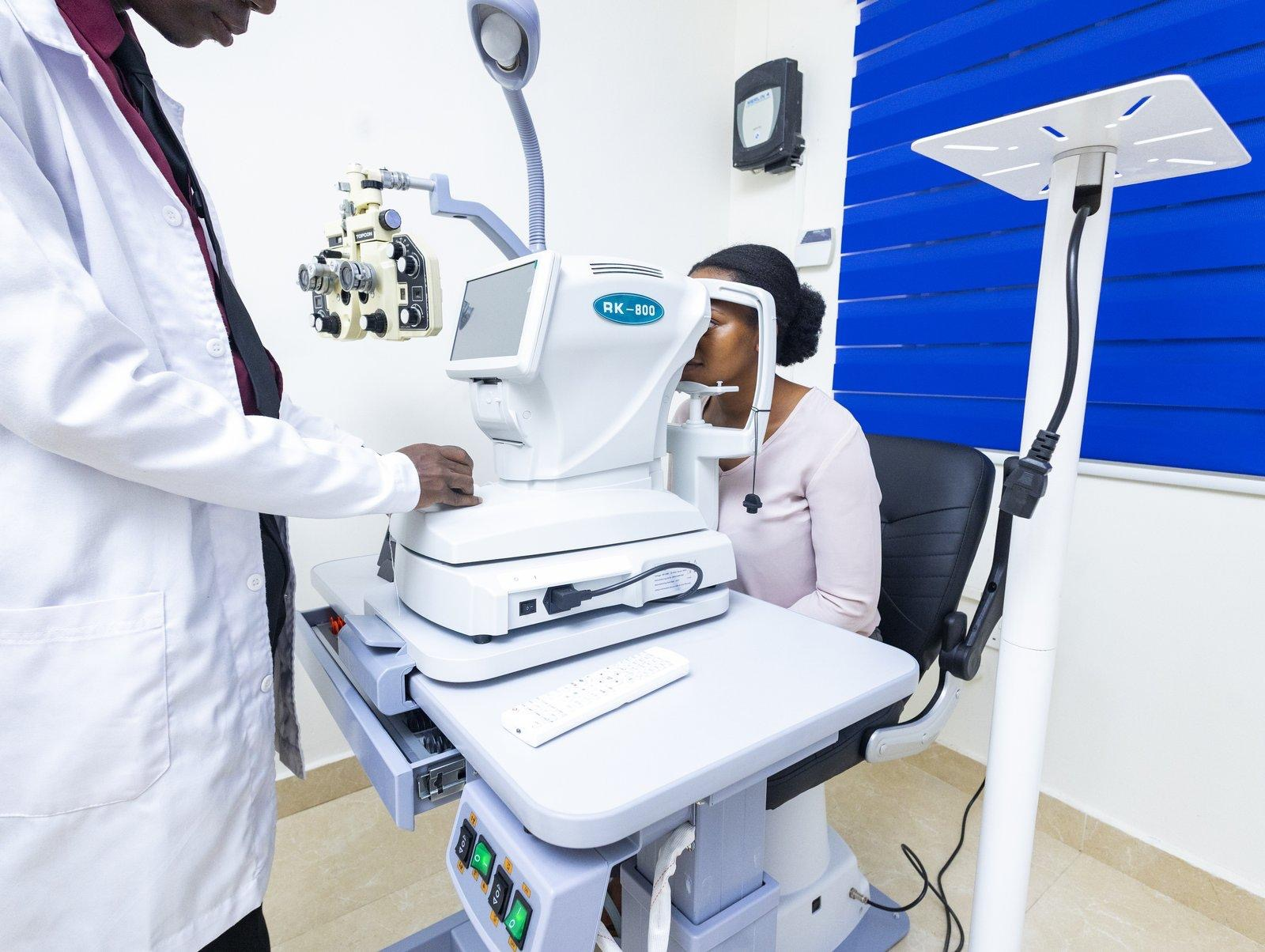
A consultation at St. Thomas Eye Hospital. Confirming what is causing your eye bags is the first step to removing them for good.
If you have tried the cool compresses, the extra sleep, and the eye creams and your under-eye bags are still there, you are not doing anything wrong. Some eye bags simply cannot be fixed at home.
The reason is in how they form, and once you understand that, the path to removing them for good becomes much clearer. If you have not yet read our overview of what causes eye bags and when to worry, that is a good place to start.
This guide walks through why eye bags come back, the non-surgical and surgical options that remove them permanently, what recovery is really like, what affects the cost, and where to get treatment here in Ghana.
Why Eye Bags Come Back After Home Remedies
Home remedies work on fluid. A cool compress, less salt, and better sleep all reduce the fluid that can pool under the eyes overnight. That is genuinely helpful for temporary, morning puffiness.
But most stubborn eye bags are not a fluid problem. They are a structural one. As we age, the thin wall that holds the eye’s natural cushioning fat in place weakens, and that fat bulges forward into the lower lid.
At the same time, the skin and muscle around the eye lose firmness. No cream, compress, or amount of sleep can move that fat back or tighten that skin. That is why the bags keep returning, and why removing them for good means addressing the fat and skin directly.
Non-Surgical Options
For milder eye bags, or for people who prefer to avoid surgery, several non-surgical treatments can noticeably improve the under-eye area. They do not last forever, but they are quicker and involve little to no downtime.
Dermal fillers
Where a bag is made more obvious by a hollow (the tear trough) just beneath it, a hyaluronic acid filler can smooth the transition between the lower lid and the cheek, softening the shadow that makes bags look worse. Results typically last several months to around a year before a top-up is needed.
Laser skin resurfacing
Laser treatment removes damaged surface skin and stimulates new collagen, which firms and smooths the under-eye skin. It is well suited to fine lines and mild skin laxity, and results can last for years depending on your skin and sun exposure.
Chemical peels
A controlled chemical peel removes the outer layers of tired skin to improve texture and tone under the eyes. It works best for skin-quality concerns rather than for prominent fat bulges.
Because these treatments target skin and shadow rather than the underlying fat, they are best for milder bags. For prominent, long-standing bags, surgery gives a more complete and lasting result.

Our clinics are equipped to assess your eyes thoroughly, so treatment is matched to the actual cause rather than guessed.
Surgical Eye Bag Removal (Blepharoplasty)
Lower eyelid surgery, called blepharoplasty, is the treatment that removes prominent eye bags most completely and for the longest. It addresses the actual cause by removing or repositioning the bulging fat, and, where needed, tightening loose skin. There are two main approaches, and your surgeon selects the right one for your anatomy:
- Transconjunctival approach. The incision is made on the inside of the lower eyelid, so there is no visible external scar. It suits people with prominent fat but little excess skin, and tends to have a faster, less swollen recovery.
- Transcutaneous approach. The incision sits just below the lash line and allows the surgeon to remove excess skin as well as fat. The fine scar settles into the natural lid crease and becomes very hard to see once healed.
A skilled surgeon leaves some fat in place rather than removing all of it, which avoids a hollow, over-operated look and keeps the result natural. This is delicate, specialised work, which is why it belongs with an eye surgeon experienced in oculoplastic procedures.

Our surgical team at work in one of our operating theatres at St. Thomas Eye Hospital.
Treatment Available in Kumasi and Mataheko
You do not need to travel abroad for eye bag treatment. St. Thomas Eye Hospital offers under-eye assessment and treatment in Ghana, with surgical eye bag removal available at our Mataheko head office and our Kumasi branch, bringing specialist oculoplastic care to both the Greater Accra and Ashanti regions.
Our surgeons will examine the cause of your eye bags, talk through the surgical and non-surgical options, and recommend the approach that fits your face and your goals.
What to Expect: Recovery and Results
Blepharoplasty is usually a day procedure, so you go home the same day. Here is a realistic picture of recovery:
- First week. Expect some bruising and swelling. Cool compresses and keeping your head elevated help settle both. Many people feel ready to return to work and everyday social activities within about seven to ten days.
- Weeks two to three. Most of the visible bruising fades. Avoid strenuous exercise for at least three weeks to protect the healing tissue.
- Longer term. Any residual swelling continues to settle over the following weeks, and the final, smooth result becomes clear.
The results of lower eyelid surgery are long-lasting. The fat that is removed does not typically return, so the improvement is, in that sense, permanent. Your face does keep ageing naturally over the years, but the bags themselves are dealt with for good. Following your surgeon’s aftercare, and protecting the area from the sun, helps you keep the result looking its best.
Cost Considerations
The cost of eye bag treatment depends on several things, so the honest answer is that it is best confirmed at a consultation. The main factors are:
- Whether you have a non-surgical treatment or surgery.
- The surgical approach used, and whether one or both lower lids are treated.
- Whether any additional work (such as skin tightening) is combined with fat removal.
One important point: because eye bag removal is usually a cosmetic procedure, it is typically not covered by health insurance, including the NHIA. During your consultation, our team will give you clear, itemised pricing so you know exactly what to expect before you decide.
Book a Consultation at St. Thomas Eye Hospital
If you are ready to deal with your eye bags properly, the specialists at St. Thomas Eye Hospital can help. A consultation will confirm what is causing them and set out your options, from non-surgical treatments to surgical removal at our Mataheko and Kumasi branches. You will leave with a clear plan and clear pricing, and no pressure.
Book a surgical consultation at St. Thomas Eye Hospital →
Frequently Asked Questions
Can eye bags be removed permanently?
Yes. Prominent eye bags caused by shifted fat are removed most completely and lastingly with lower eyelid surgery (blepharoplasty), because the fat that is taken away does not usually return. Non-surgical options improve milder bags but last months to a few years.
Why won’t home remedies get rid of my eye bags?
Home remedies reduce fluid, which helps temporary morning puffiness. They cannot move the bulging fat or tighten the loose skin that cause structural eye bags, so those bags keep coming back.
What is blepharoplasty?
Blepharoplasty is lower eyelid surgery that removes or repositions the fat causing under-eye bags, and tightens excess skin if needed. It can be done through an incision inside the lid (no visible scar) or just below the lash line.
How long is recovery after eye bag surgery?
Bruising and swelling are most noticeable in the first week, with many people returning to work in about seven to ten days. Strenuous exercise should be avoided for around three weeks, and residual swelling settles over the following weeks.
Is eye bag surgery permanent?
The removed fat does not typically return, so the improvement is long-lasting. Your face still ages naturally over time, but the treated bags themselves are dealt with for good.
Is eye bag treatment available in Ghana?
Yes. St. Thomas Eye Hospital offers under-eye assessment and treatment in Ghana, with surgical eye bag removal available at the Mataheko and Kumasi branches.
Does insurance or the NHIA cover eye bag removal?
Because it is usually a cosmetic procedure, eye bag removal is typically not covered by insurance or the NHIA. Your consultation will include clear pricing so you know the cost upfront.

Dr. Michael E. Gyasi is the Medical Director and founder of St. Thomas Eye Hospital — a multi-branch specialist facility that introduced phacoemulsification cataract surgery and micro-incisional vitrectomy surgery to Ghana. Under his leadership, the hospital has delivered over 10,000 free sight restoration surgeries and screened more than 200,000 people for eye disease across the country.
Tags :