QUICK ANSWER Botox is a brand of botulinum toxin type A, a prescription medicine that temporarily reduces the activity of selected...
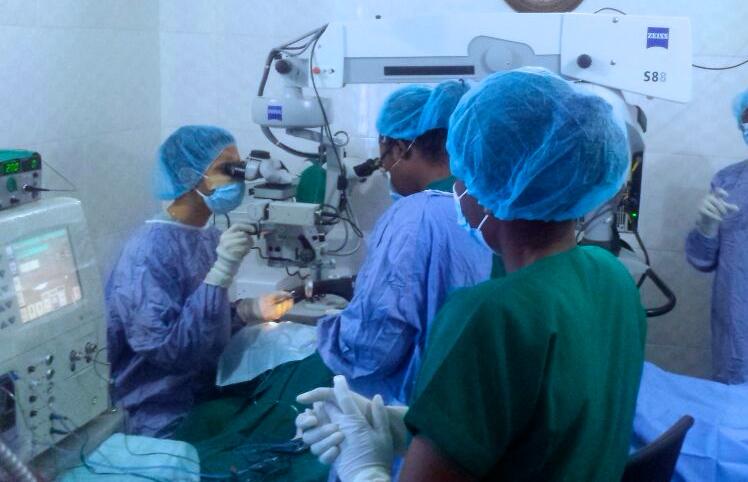
Cataract Surgery in Ghana: What Patients Ask Most, Answered by Eye Specialists
Cataract is the leading cause of preventable blindness in Ghana, and in sub-Saharan Africa as a whole. Yet most patients who develop cataracts wait far longer than they should before seeking surgical treatment. Some wait because of cost concerns.
Some wait because of fear. Many wait because nobody ever gave them clear, honest answers to the questions that were holding them back.
This article does exactly that. Below are the questions patients at St. Thomas Eye Hospital ask most often about cataract surgery, answered by our clinical team with accuracy, specificity, and respect for the Ghanaian patient’s real context.
In This Article
- What is a cataract, exactly?
- How do I know I have one?
- When is the right time for surgery?
- What happens during the surgery?
- Phaco vs SICS — which is for me?
- Will it be painful?
- What does it cost in Ghana?
- What is recovery like?
- What about the other eye?
- Will I still need glasses?
- What are the risks?
What Is a Cataract and Why Does It Happen?
Your eye’s natural lens sits behind the pupil and is normally clear; it focuses light onto the retina at the back of the eye. A cataract occurs when this lens becomes progressively cloudy or opaque.
The cloudiness scatters incoming light instead of focusing it cleanly, causing blurred, hazy, or dimmed vision.
The key word is progressive. A cataract doesn’t appear overnight. It develops slowly — often over years — which is exactly why so many people in Ghana normalise the symptoms and delay seeking help.
What causes cataracts? Is it something I did wrong?
No, and this is important to understand. The most common type of cataract is age-related: the lens protein naturally changes structure over decades, leading to clouding. It is not caused by reading in poor light, watching screens, or any personal habit.
However, several factors can accelerate cataract development, and in Ghana these are particularly relevant:
- Prolonged UV exposure — Ghana’s high-intensity sun accelerates lens clouding, especially for outdoor workers, farmers, and fisherfolk
- Diabetes — poorly controlled blood sugar is one of the strongest risk factors for early cataract development
- Steroid use — long-term use of corticosteroid medications (including skin-lightening creams) can cause posterior subcapsular cataracts
- Eye injury — a blow to the eye or chemical exposure can trigger traumatic cataract
- Indoor smoke — prolonged exposure to wood and charcoal cooking fire has been associated with accelerated cataract progression in West African populations
How Do I Know If I Have a Cataract?
Cataracts produce a recognisable pattern of symptoms that typically develop gradually. If you notice several of these, book a specialist eye examination:
Common Cataract Symptoms
- Blurry, cloudy, or foggy vision — like looking through dirty glass
- Colours appearing faded, yellowed, or less vivid than before
- Increased glare — headlights, sunlight, or bright lights feel harsh
- Halos appearing around lights, especially at night
- Frequent changes in glasses prescription that don’t seem to help
- Difficulty reading or doing close work even with glasses
- “Second sight” — temporary improvement in near vision (often followed by worsening)
- Double vision in one eye
How long should I wait before seeing a doctor? Can I manage without surgery?
You should seek a specialist assessment as soon as cataract symptoms begin affecting your daily life — driving, reading, working, or recognising faces. There is no medication, eye drop, or supplement that can reverse a cataract. Surgery is the only effective treatment.
The danger of waiting is twofold. First, the cataract continues to progress — the denser and harder the lens becomes, the more technically complex the surgery.
Second, in Ghana, research shows that cataract surgical uptake is lower than expected precisely because patients underestimate how treatable the condition is and assume vision loss is just “part of getting older.” It is not. It is a treatable medical condition.
The right time for surgery is when your vision impairment is affecting your quality of life — not when you’ve gone blind in one eye.
What Actually Happens During Cataract Surgery?
Cataract surgery is a day procedure: you come in, have surgery, and go home the same day. Here is what the process looks like at St. Thomas Eye Hospital:
- Pre-operative assessment — your eye is examined, measurements are taken (biometry) to calculate the correct artificial lens power for your eye, and your general health is reviewed
- Anaesthesia — numbing drops are applied to your eye. You remain awake throughout but feel no pain. A mild sedative may be given if needed
- Surgery — a small incision is made, the cloudy lens is broken up and removed, and a clear artificial intraocular lens (IOL) is inserted in its place. The procedure typically takes 10–20 minutes per eye
- Recovery — you rest briefly, receive eye drops and instructions, and go home with an eye shield. A family member or escort should accompany you

Phacoemulsification vs. SICS: Which Type of Surgery Is Right for Me?
Both are safe, effective, internationally recognised surgical techniques that achieve the same outcome: removal of the cloudy lens and insertion of a clear artificial lens. The choice depends on the state of your cataract, your eye’s specific measurements, and clinical judgment.
| Factor | Phacoemulsification (Phaco) | Manual SICS |
|---|---|---|
| How it works | Ultrasound probe breaks up the lens; removed through a ~2–3mm incision | Lens expressed through a 5–7mm self-sealing tunnel incision |
| Incision size | Very small (2–3mm) | Small (5–7mm) |
| Stitches needed | Usually none | Usually none |
| Recovery speed | Typically faster | Slightly longer, comparable outcomes |
| Best for | Early–moderate cataracts; thinner, softer lenses | Advanced/dense cataracts; very mature cases |
| Outcome quality | Excellent | Excellent — studies show comparable final visual results |
| Cost | Typically higher | More cost-effective; preferred in high-volume African settings |
Your surgeon will recommend the most appropriate technique based on your specific eye assessment. In sub-Saharan Africa, SICS has been validated in numerous studies as achieving outcomes within WHO guidelines, and is the preferred technique for advanced cataracts — which are common in Ghana due to late presentation.
Do not assume phaco is always “better” — what matters is the right technique for your eye, performed by a trained surgeon.
What Does Cataract Surgery Cost in Ghana, and Is It Covered by NHIA?
Cost is the most asked question — and the most important one for Ghanaian patients to get accurate information about. Globally, cataract surgery costs vary widely: in the US, for example, it ranges from $3,500–$7,000 per eye out-of-pocket.
In Ghana, costs are significantly lower, but vary depending on the facility, technique used, and type of intraocular lens selected.
As a general guide for the Ghanaian context:
Cost Factors in Ghana
- Facility type — private specialist hospital vs. teaching hospital
- Surgical technique — phacoemulsification vs. SICS (SICS is more affordable)
- IOL type — standard monofocal lens (most common) vs. premium multifocal or toric lens
- Pre-operative tests — biometry, OCT, general health assessment
- Post-operative follow-up and prescribed eye drops
For specific pricing at St. Thomas Eye Hospital, we recommend contacting the branch closest to you directly. Transparent pricing is a priority; no patient should be surprised by costs after consultation.

What Is Recovery Like After Cataract Surgery?
Most patients notice significant improvement in vision within 24–48 hours of surgery. Vision continues to sharpen over the following 2–6 weeks as the eye settles and any mild inflammation resolves. The full extent of visual improvement is usually apparent within 4–8 weeks.
Some patients describe the experience of first clear vision after cataract surgery as dramatic: colours appear brighter, text becomes readable again, and spatial perception improves. This is especially moving for patients who have been managing severely impaired vision for years.
I have cataracts in both eyes. Will both be done at the same time?
As a general practice, both eyes are not operated on simultaneously. Surgery is performed on one eye first, with a recovery period of typically 1–4 weeks before the second eye is operated on.
This approach allows the first eye to heal, gives the surgeon the opportunity to confirm the outcome, and ensures that any adjustment in lens power for the second eye can be made based on how the first eye responded.
During the interval between surgeries, you may notice a significant difference between your two eyes — one operated and clear, one still cloudy. This is temporary and expected. Most patients manage well during this period.
What Should I Do If I Suspect I Have a Cataract?
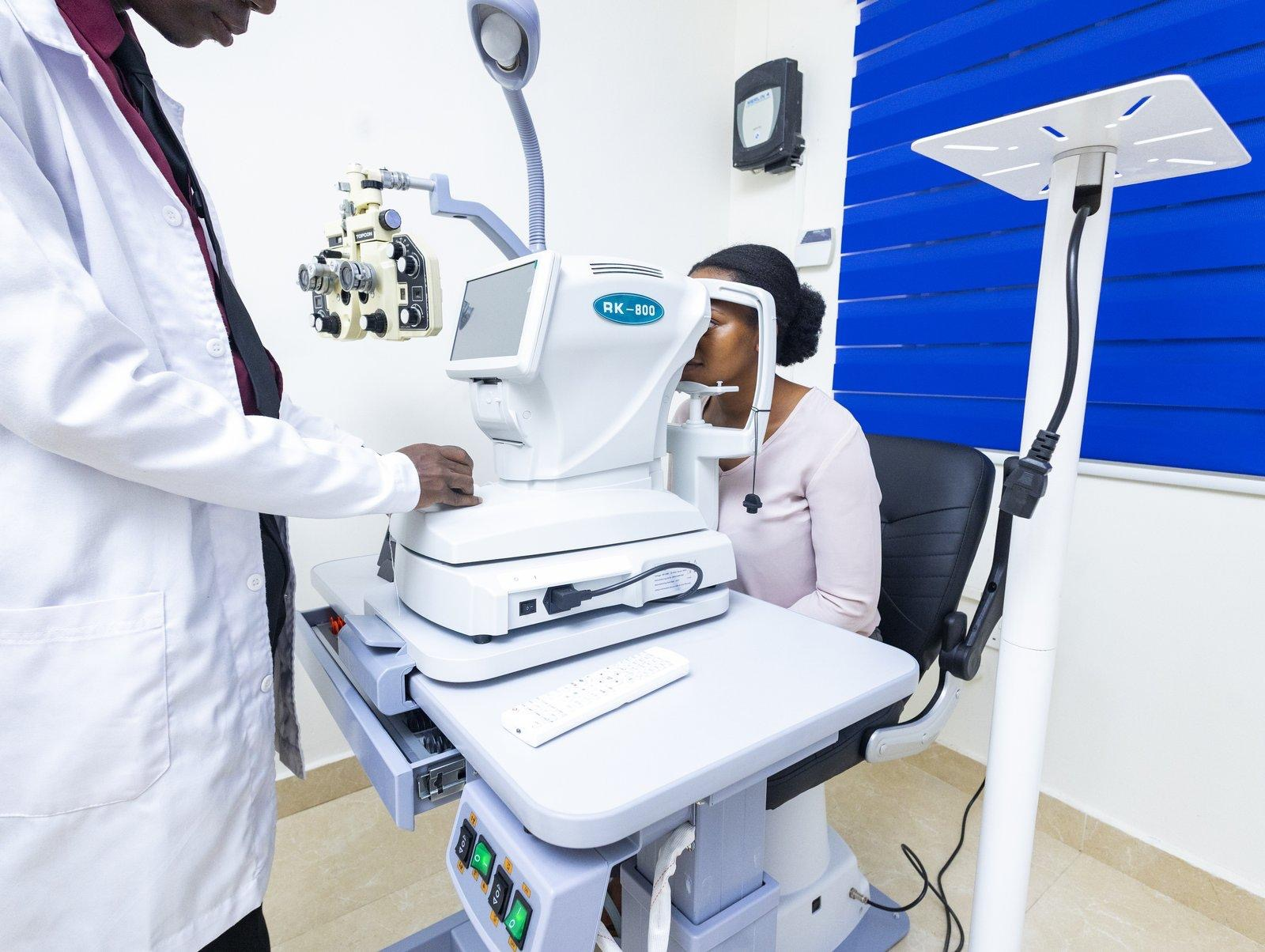
Book a comprehensive eye examination at a specialist facility. Not a quick visual acuity check at a pharmacy or optical shop — a thorough examination that includes slit-lamp assessment, fundoscopy, and pressure measurement.
At St. Thomas Eye Hospital, a consultation will determine whether a cataract is present, how advanced it is, whether any other conditions are contributing to your vision loss, and — if surgery is recommended — which technique is most appropriate for your eye. You will leave with clear answers, not a rushed prescription.
Cataracts are not a normal part of ageing that must simply be endured. They are a treatable medical condition. In Ghana, with NHIA coverage and specialist facilities available in Accra, Tema, Kumasi, and Takoradi, there is no reason for any patient to lose their sight to a cataract in 2026.

Dr. Michael E. Gyasi is the Medical Director and founder of St. Thomas Eye Hospital — a multi-branch specialist facility that introduced phacoemulsification cataract surgery and micro-incisional vitrectomy surgery to Ghana. Under his leadership, the hospital has delivered over 10,000 free sight restoration surgeries and screened more than 200,000 people for eye disease across the country.
Tags :