QUICK ANSWER Botox is a brand of botulinum toxin type A, a prescription medicine that temporarily reduces the activity of selected...
7 Laser Eye Treatments Available in Ghana and Exactly What Each One Fixes
By Dr. Michael Gyasi
Medical Director & Vitreoretinal Surgeon, St. Thomas Eye Hospital

“Laser surgery” is one of those phrases that gets used for almost anything in ophthalmology, and it scares more patients than it should.
In reality, laser treatment in eye care isn’t one procedure, it’s a toolkit of seven distinct treatments, each aimed at a completely different problem, ranging from sealing a retinal tear to lowering eye pressure without a single incision.
Some take fifteen minutes in an outpatient room. None of them are the dramatic “laser eye surgery” most people picture from adverts for vision correction abroad.
This article breaks down every laser procedure offered at St. Thomas Eye Hospital, what condition each one treats, how long it takes, and what recovery actually looks like. If you’ve been told you need “laser treatment” and want to know what you’re actually walking into, this is the article.
Quick Reference: Which Laser Treats What
| Procedure | Condition Treated | Typical Duration |
| PRP (Pan-Retinal Photocoagulation) | Diabetic retinopathy, retinal vein occlusion | 15–20 min/session, 2–3 sessions |
| Focal / Scatter Laser | Localised retinal leakage, diabetic macular oedema | 10–15 minutes |
| SLT (Selective Laser Trabeculoplasty) | Open-angle glaucoma, eye pressure control | 5–10 minutes |
| YAG Laser Iridotomy | Narrow-angle glaucoma, angle-closure risk | 5–10 minutes |
| YAG Laser Capsulotomy | Clouding after cataract surgery (PCO) | Under 5 minutes |
| Laser TSCPC | Advanced or refractory glaucoma | 15–20 minutes |
| Retinal Focal Laser | Retinal tears, sealing before detachment | 10–15 minutes |
All seven are listed under Laser Services on our Services page. Here’s what each one actually involves.
1. PRP — Pan-Retinal Photocoagulation
Treats: Proliferative diabetic retinopathy, the advanced stage where the retina starts growing fragile, abnormal blood vessels.
PRP works by applying hundreds of small laser burns across the peripheral retina. This reduces the retina’s oxygen demand, which switches off the signal telling it to grow dangerous new vessels. It sounds aggressive, but the peripheral retina can absorb this treatment without affecting your central vision.
Sessions are usually split two to three ways, about a week apart. We cover this procedure in full detail, including what the day of treatment looks like, in our diabetic retinopathy guide.
2. SLT — Selective Laser Trabeculoplasty
Treats: Open-angle glaucoma, or as a way to reduce dependence on daily eye drops.
This is the laser procedure most likely to be misunderstood, because it sounds invasive and isn’t. SLT directs low-energy laser pulses at the trabecular meshwork, the eye’s internal drainage system, targeting only the pigmented cells responsible for blocked drainage.
Clinical studies consistently show SLT lowers intraocular pressure by 25–30%, performing comparably to daily drops without the daily compliance burden.
The procedure takes five to ten minutes. You’ll feel a series of light clicks, not pain. Most patients are back to normal activity the same day, with a follow-up to check pressure within a few weeks.
This matters enormously in Ghana, where glaucoma prevalence is the highest in Africa and where many patients struggle to maintain a daily drop regimen due to cost or access. SLT offers a genuine alternative path to pressure control. Read more in Eye Drops, Laser, or Surgery? Understanding Your Glaucoma Treatment Options.
3. YAG Laser Iridotomy
Treats: Narrow-angle glaucoma, or eyes at risk of a sudden angle-closure attack.
In some eyes, the drainage angle is naturally too narrow, which can cause a sudden, painful spike in eye pressure — a genuine emergency.
YAG iridotomy creates a microscopic hole in the iris, giving fluid an alternative drainage route and permanently reducing the risk of an attack. It’s typically a preventive procedure performed once symptoms or risk factors are identified, not after an emergency.
4. YAG Laser Capsulotomy
Treats: Posterior capsule opacification (PCO) — vision clouding that can occur months or years after cataract surgery.
This is one of the most common reasons patients return to St. Thomas after a successful cataract operation. The lens capsule that holds your artificial lens in place can become cloudy over time, blurring vision again in a way that feels just like the original cataract.
YAG capsulotomy clears a small opening in that capsule with a laser, no incision, no anaesthesia injection, under five minutes. Vision typically improves within hours.
If you’ve had cataract surgery and your vision has started clouding again, this is very likely the explanation. We cover this and other post-surgery questions in Cataract Surgery in Ghana: What Patients Ask Most.

5. Laser Transscleral Cyclophotocoagulation (TSCPC)
Treats: Advanced or treatment-resistant glaucoma where pressure remains high despite drops, SLT, or previous surgery.
TSCPC works differently from SLT — instead of improving drainage, it reduces the amount of fluid the eye produces in the first place, by targeting the ciliary body from outside the eye wall.
This is typically reserved for more advanced or stubborn cases, often after other options have been tried. It’s a more involved procedure than SLT but still avoids open surgery.
6. Scatter Laser Treatment
Treats: Broader retinal conditions involving widespread leakage or abnormal vessel growth beyond the proliferative diabetic retinopathy cases treated with full PRP.
Functionally similar to PRP but applied more selectively depending on the pattern of disease across the retina, scatter laser treatment is tailored to the specific areas showing leakage on retinal imaging.
7. Retinal Focal Laser
Treats: Retinal tears, identified before they progress to a full retinal detachment.
If a tear is caught early, often during a routine dilated eye exam or after sudden flashes and floaters that turn out to be borderline — a focal laser can seal the edges of the tear, preventing fluid from getting underneath the retina and causing it to detach.
This is one of the best examples of why a same-day assessment after sudden floaters matters: catching a tear at this stage can mean the difference between a 10-minute laser and emergency surgery. See our guide: Retinal Detachment in Ghana — Warning Signs and Why Every Hour Counts.
What Laser Treatment Actually Feels Like
Across all seven procedures, a few things are consistently true:
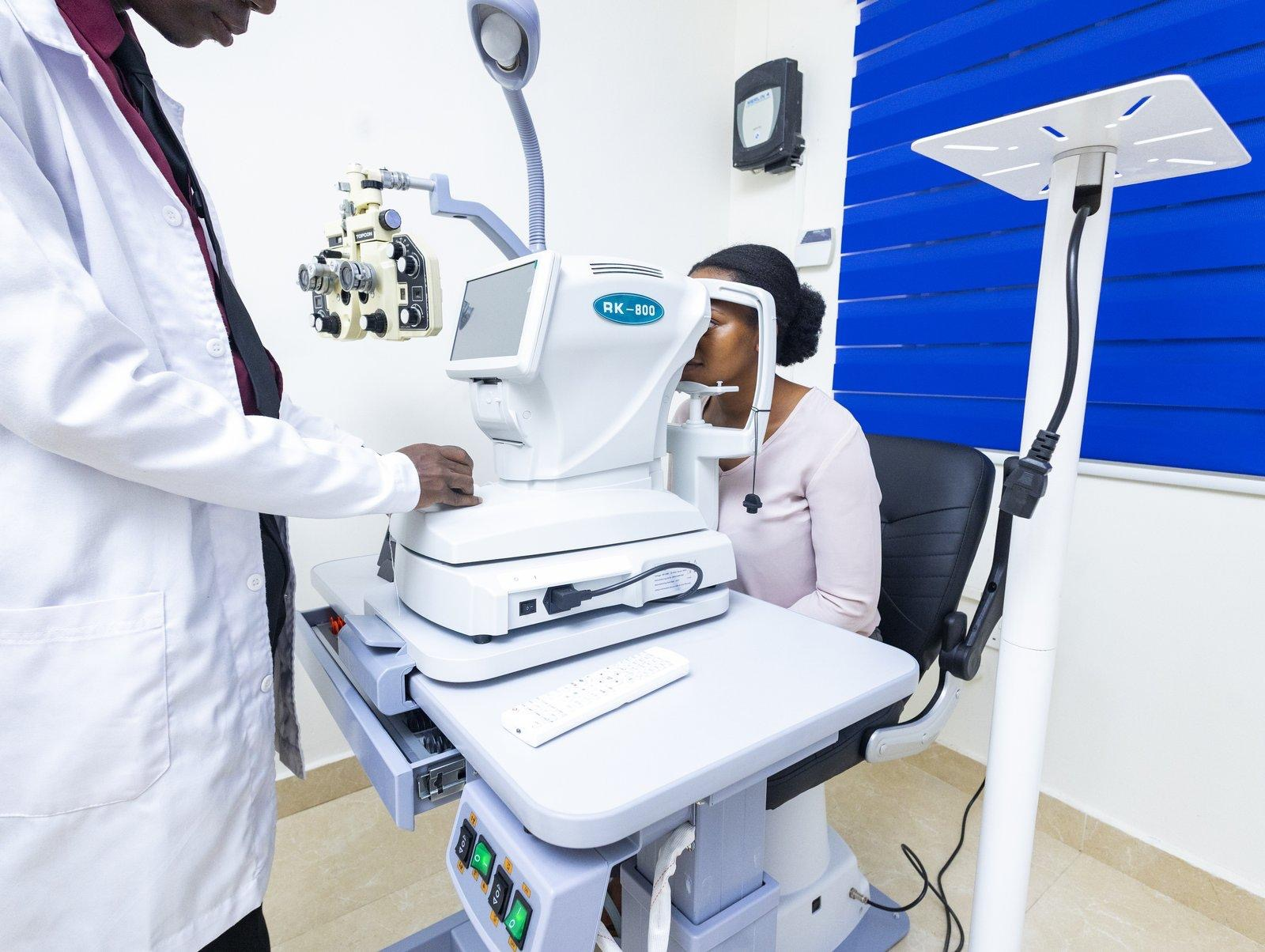
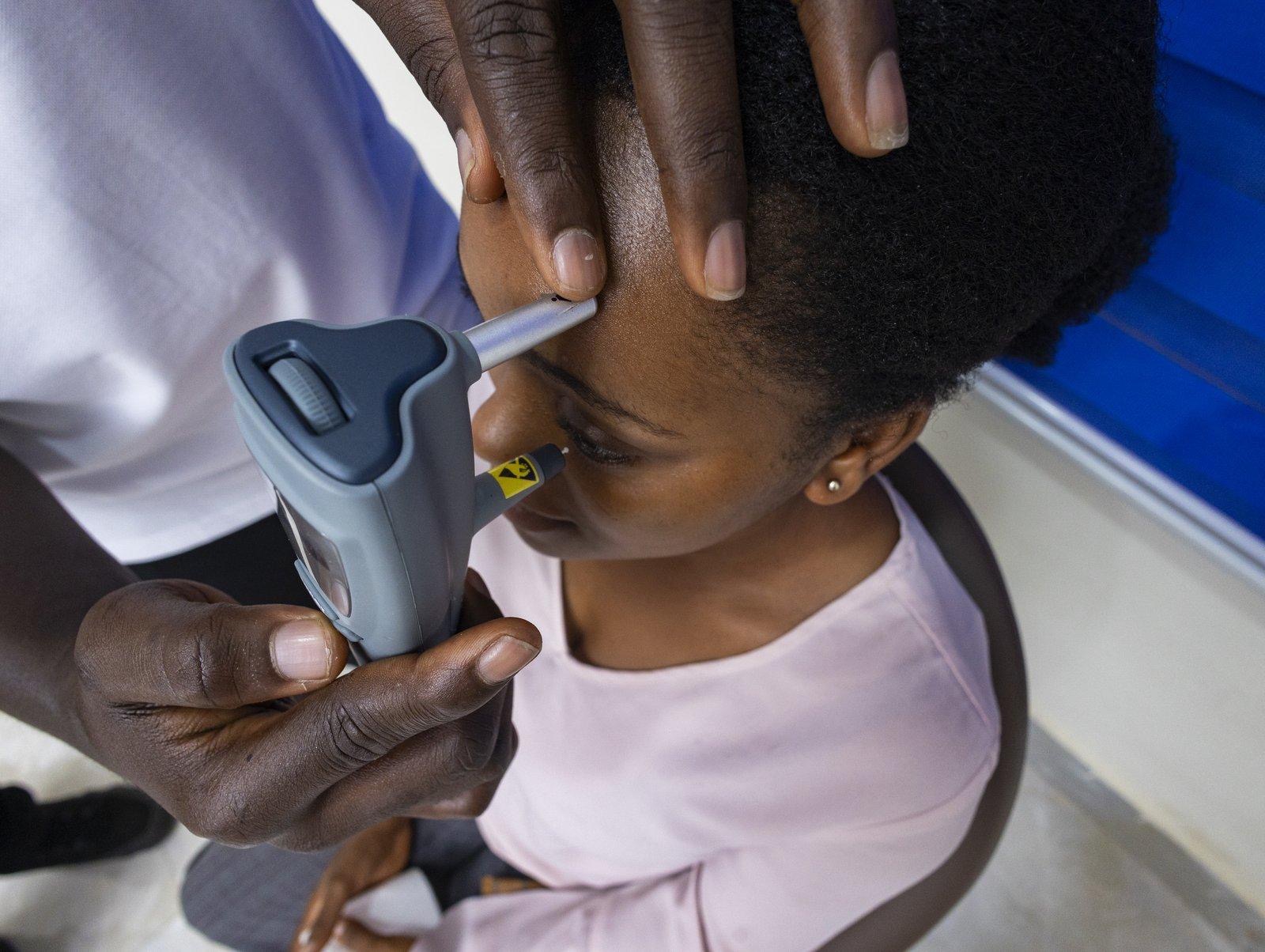
• You’re awake throughout. None of these require general anaesthesia. Numbing drops are used; you’ll be seated at a slit-lamp-style machine, not lying on an operating table.
• Most are same-day, walk-in-walk-out procedures. Outside of multi-session PRP, you typically don’t need someone to stay with you, though we recommend arranging a ride home if your pupils have been dilated.
• Discomfort is mild. Most patients describe stinging, pressure, or brief flashes of light — not pain. Retinal laser sessions can feel sharper than glaucoma lasers, simply because the retina is more sensitive.
• Vision may be blurry for a few hours afterward, particularly if drops were used to dilate the pupil. Bring sunglasses and avoid driving yourself home on the day of treatment.
Who Performs These Procedures at St. Thomas?
Laser treatments are performed by our ophthalmologists across all four branches — Mataheko, Osu, Tema, and Kumasi.
Complex retinal laser cases involving advanced diabetic retinopathy or retinal tears are typically led by Dr. Michael Gyasi, our fellowship-trained vitreoretinal surgeon. Glaucoma laser procedures (SLT, iridotomy, TSCPC) are available at all branches as part of our standard glaucoma care pathway.
To find out which laser treatment is right for your condition, book a consultation. A comprehensive eye exam, including imaging where needed, will determine the right procedure and in many cases, you can be treated the same day.
St. Thomas Eye Hospital offers the full range of laser surgical services across all four branches, including PRP, SLT, YAG iridotomy and capsulotomy, TSCPC, scatter laser, and retinal focal laser. View all our services →

Dr. Michael E. Gyasi is the Medical Director and founder of St. Thomas Eye Hospital — a multi-branch specialist facility that introduced phacoemulsification cataract surgery and micro-incisional vitrectomy surgery to Ghana. Under his leadership, the hospital has delivered over 10,000 free sight restoration surgeries and screened more than 200,000 people for eye disease across the country.
Tags :