QUICK ANSWER Botox is a brand of botulinum toxin type A, a prescription medicine that temporarily reduces the activity of selected...

Living in Tema? Here’s Why Regular Eye Checks Matter More Than You Think
Tema wears its identity on its skyline. Cranes at the port. Factory chimneys in the free zone. Steel mills. Cement works. Refineries.
If you live or work in Tema — Ghana’s undisputed industrial capital — you already understand what it means to be at the centre of things. What you may not have considered is what that environment is quietly doing to your eyes.
This isn’t a distant concern. It’s something eye specialists observe daily in patients across Ghana’s port cities and industrial corridors.
And what makes Tema particularly striking is the combination of risks: occupational exposure, coastal weather patterns, urban density, and a cultural tendency to normalise eye discomfort — all layered on top of each other, year after year.
Here’s what every Tema resident deserves to know.
The Industrial Factor: A Unique Eye Health Risk
Tema is not just any Ghanaian city. It was purpose-built as Ghana’s industrial heartbeat, commissioned under President Kwame Nkrumah in the 1960s and home to the country’s largest port, an oil refinery, aluminium smelters, steel mills, textile factories, and a sprawling free zone enclave packed with manufacturing operations.

That industrial density has a direct cost on the air — and therefore on residents’ eyes.
According to environmental reporting, the free zone area of Tema is so heavily polluted with sulfur-rich industrial smoke that workers in steel mills describe it as difficult to breathe or even see clearly on their shifts. Most have no protective eyewear. Most live in the communities immediately surrounding these facilities.
Across Ghana’s urban cities, annual fine particulate matter (PM2.5) concentrations range between 50 and 68 micrograms per cubic metre — more than ten times the WHO’s recommended limit of 5 μg/m³. In an industrial city like Tema.
Factory emissions layer on top of vehicle exhaust, port activity, and construction dust, to expose residents to not just fine particulate matter but to the kind of complex chemical cocktail — nitrogen dioxide, ozone, volatile organic compounds, and heavy metal particulates — that directly irritates and, over time, damages the surface tissues of the eye.
What Tema’s Environment Does to Your Eyes Over Time
Most people in Tema don’t connect their eye symptoms to their environment. They blame stress. They blame screen time. They blame getting older.
Sometimes, they don’t give it a name at all; they just wipe their eyes and keep going.
But the pathways from industrial pollution to eye damage are well-established in the medical literature. Here’s what’s actually happening:
Chronic irritation and dry eye syndrome
Particulate matter, sulfur dioxide, and ozone all strip the tear film — the thin protective layer that keeps your eyes lubricated.
When that film is repeatedly disrupted, the result is chronic dry eye syndrome: persistent redness, a gritty or burning sensation, and fluctuating vision.
In industrial environments, workers often experience these symptoms so regularly that they consider them “normal.” It is not.
Increased cataract risk from UV and chemical exposure
Tema’s coastal location means high year-round UV exposure from sunlight reflecting off both the ocean and the open industrial landscape.
Combined with chemical particulates that settle on the lens over time, this accelerates the clouding process that leads to cataracts.

Research from coastal Ghana has found that occupational smoke exposure — including from fish smokers in coastal communities — is strongly associated with impaired vision and cataract development, with fish smokers nearly seven times more likely to have vision-impacting eye problems than controls.
Conjunctivitis and surface infections
Industrial dust and chemical particles that land on the eye surface create a constantly inflamed environment. This makes Tema residents — particularly those working in the port area, construction, or the free zone — significantly more susceptible to recurrent conjunctivitis and corneal surface infections.
Many self-treat with over-the-counter eyedrops and move on, without understanding that repeated, untreated infections can leave scarring on the cornea over time.
The Tema Lifestyle Factors That Compound the Risk
Beyond the industrial environment itself, Tema’s daily life introduces additional layers of eye stress that rarely get named as such.
Port and logistics workers: the highest-risk group
Tema Port now operates 24 hours a day following full implementation of Ghana’s 24-hour port economy policy.
That means thousands of dockworkers, truck drivers, logistics staff, and clearing agents spending long shifts in an environment full of diesel exhaust, metal dust, cargo chemical fumes, and direct UV exposure — often without eye protection, and often without access to occupational health screening.
The fishing harbour community
Tema has an active fishing harbour and a community of fisherfolk whose livelihoods depend on proximity to the coast.
Prolonged sun glare off the ocean surface is one of the most underappreciated causes of pterygium — a fleshy, wedge-shaped growth that spreads across the eye surface — and UV-related cataracts.
In coastal fishing communities globally, these conditions appear at significantly younger ages than in inland populations.
Harmattan and seasonal dust peaks
Between November and March, the Harmattan wind carries Saharan dust deep into Ghana’s coast. In Tema, where industrial particulates already fill the air, Harmattan season creates a doubled burden on the eye surface.
Residents frequently report their worst eye symptoms during this period — yet most attribute it to the season alone and wait for it to pass, rather than seeking assessment.
“People living near industrial zones often have the same symptoms as someone with a chronic eye condition — redness, grittiness, fluctuating vision — but they’ve been told it’s just the environment. That framing is dangerous, because some of those symptoms are early warnings that deserve a proper look.”
— Ophthalmology team, St. Thomas Eye Hospital
Signs You Shouldn’t Brush Off
See an Eye Specialist If You Notice Any of These:
- Persistent redness or burning that returns after using eyedrops
- A gritty or “something in my eye” sensation that doesn’t go away
- Blurry or hazy vision — especially in the mornings or after outdoor work
- A whitish or cloudy patch growing on the eye surface (possible pterygium)
- Sensitivity to light, especially outdoors or in bright industrial lighting
- Seeing halos around lights at night or while driving
- Any sudden change in vision — partial blackout, floaters, flashes of light
- Children squinting frequently, rubbing their eyes, or complaining of headaches after school
St. Thomas Eye Hospital — Now Verified and Serving Tema
St. Thomas Eye Hospital’s Tema branch has recently completed its Google Business Profile verification — meaning Tema residents can now find it easily online and book with confidence that they’re reaching a legitimate, active facility.

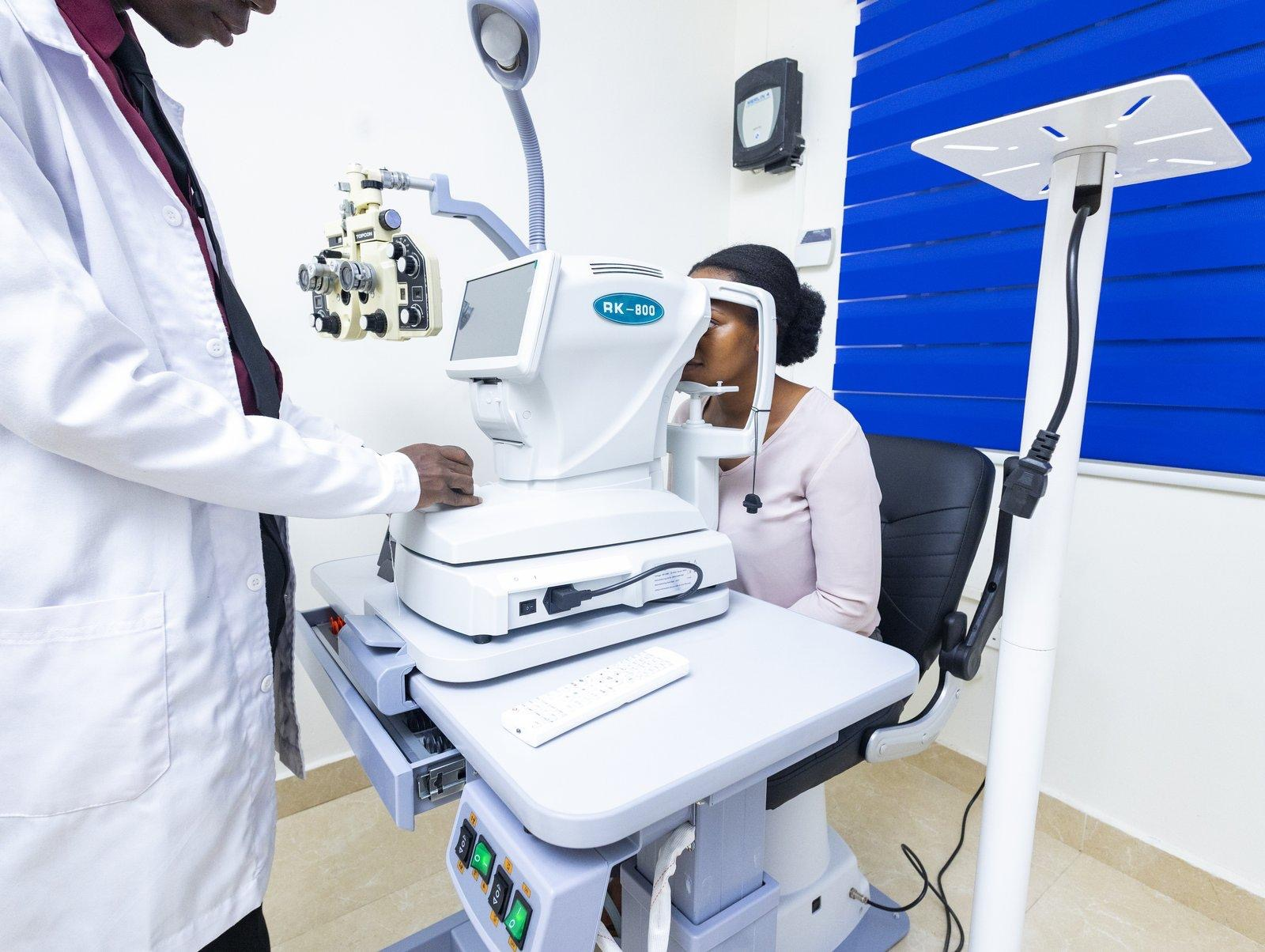
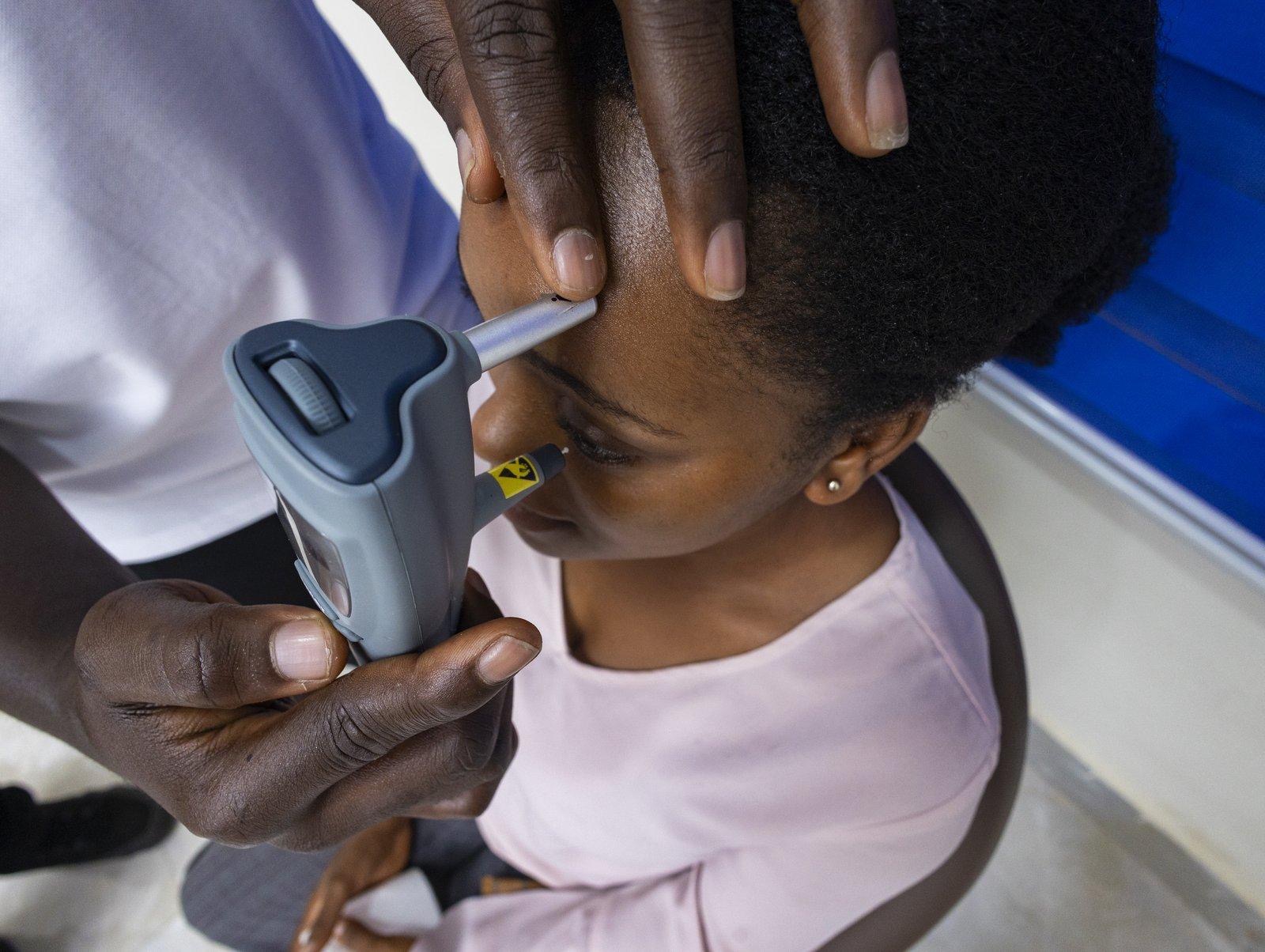
The branch offers the full range of specialist eye services: comprehensive eye examinations using slit-lamp technology, cataract screening and surgical referrals, glaucoma assessments, pterygium evaluation, retinal health checks, and optical coherence tomography (OCT) for detailed posterior segment imaging.
The facility is HEFRA-accredited and NHIA-approved, making care accessible to insured patients across Tema’s communities.
Walk-ins are welcome Monday through Saturday. For workers in the port zone, the free zone, or the fishing harbour — communities with the highest environmental eye exposure in the region — a regular annual eye check is not optional.
It’s the difference between catching something early and dealing with something permanent.
A Word Directly to Tema Families
One group that gets overlooked in these conversations is children. Tema’s school-age children are growing up in one of Ghana’s most industrially exposed environments. They spend time outdoors. They play in communities near factories and the harbour.
Their eyes are developing. And unlike adults, they often can’t articulate that something isn’t right — they just squint, sit closer to the board, or get labelled as inattentive.
If your child hasn’t had an eye check in the last year, and you live in Tema, that’s worth prioritising. A simple examination can rule out refractive errors that would otherwise affect their learning and development for years.
Tema’s strength has always been its industry. But that same industry asks something of the people who live and work within it. Your eyes are worth the same care and attention you give everything else in your life. They just don’t complain loudly enough — until it’s late.
Book your eye check at our Tema branch
St. Thomas Eye Hospital, Tema, Greater Accra

Dr. Michael E. Gyasi is the Medical Director and founder of St. Thomas Eye Hospital — a multi-branch specialist facility that introduced phacoemulsification cataract surgery and micro-incisional vitrectomy surgery to Ghana. Under his leadership, the hospital has delivered over 10,000 free sight restoration surgeries and screened more than 200,000 people for eye disease across the country.