QUICK ANSWER Botox is a brand of botulinum toxin type A, a prescription medicine that temporarily reduces the activity of selected...
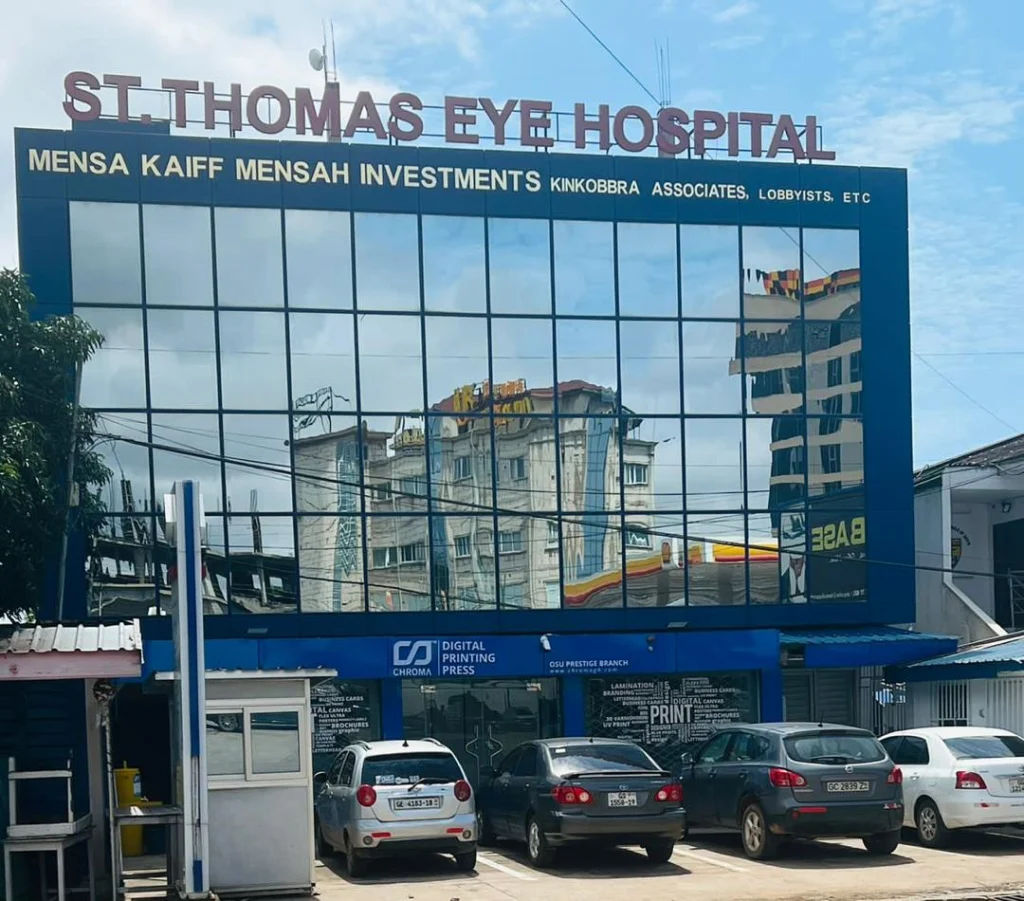
Eye Care in Osu: What Residents Need to Know About Finding a Trusted Eye Clinic
If you live or work in Osu, you already know the pace of this neighbourhood. From the morning rush along Oxford Street to the late-night buzz near Danquah Circle, Osu doesn’t slow down.
And if you’re honest, neither do you. Between work, family, and the general busyness of Accra life, your eyes are probably the last thing on your mind.
But here’s what nobody tells you: Osu — precisely because of how vibrant and busy it is — may be one of the toughest environments for your eye health in all of Accra. And most residents don’t find that out until something goes wrong.
This is not a scare piece. It’s simply what we’ve seen — and what you deserve to know — if you’re going to protect one of the most important things you have.
Why Osu Is Harder on Your Eyes Than You Think
Osu is densely commercial. That means traffic, diesel fumes, construction dust, and crowds — essentially a daily cocktail of airborne irritants that most people breathe (and absorb through their eyes) without giving it a second thought.
According to research by the WHO, Accra’s average annual PM2.5 pollution levels are roughly five times the WHO’s recommended guideline for fine particulate matter.
During the dry season — roughly November to March — Harmattan winds push Saharan dust deep into the city, aggravating the eyes, nose, and mucous membranes of residents.
If you’ve ever woken up in the heart of Harmattan season with red, itchy eyes and assumed it was nothing, your environment was likely the culprit.
The pollution picture doesn’t improve during the rest of the year either. Vehicle emissions, dust from unpaved roads, and open burning of refuse keep air quality consistently strained throughout Greater Accra. The mucous membranes of the eyes, nose, and mouth are directly affected by prolonged exposure to these fine particles.
For Oxford Street traders, Pragya riders, hawkers, and anyone who spends long hours outdoors in Osu, this exposure is daily and cumulative.

The Lifestyle Factors Most Osu Residents Overlook
Beyond outdoor pollution, there are quieter risks that build up over time, and Osu’s lifestyle is full of them.
Screen exposure in an always-on neighbourhood
Osu is home to some of Accra’s most active businesses, tech hubs, offices, and creative spaces. That means long hours on laptops, phones, and screens.
Digital eye strain — headaches, blurred vision, dry eyes, and difficulty focusing — is one of the fastest-growing complaints eye specialists are seeing across urban Ghana. The condition is rarely taken seriously until it starts affecting work performance.
Night market and nightlife exposure
Osu’s famous night market draws both locals and visitors to kelewele, grilled tilapia, and banku stalls lit by kerosene lamps and coloured lights. Prolonged exposure to smoke from open-fire cooking — a fixture of the market experience — is a real, consistent irritant to the eyes. For those who work the stalls nightly, it’s an occupational hazard that rarely gets named as such.
The Harmattan habit of ignoring symptoms
Across Accra, there’s a cultural pattern we’ve observed: people normalize eye redness, irritation, and blurry spells during Harmattan. They buy over-the-counter eye drops, use them for a week, and move on.
What gets missed in that cycle is that some of those symptoms — if persistent — are early signs of conditions like dry eye syndrome, conjunctivitis, or even the beginning stages of glaucoma. The Harmattan masks them in plain sight.
What Does a Trusted Eye Clinic in Osu Actually Look Like?

This is a question worth asking seriously. Accra has no shortage of optical shops and general clinics that will sell you a pair of glasses. But a trusted specialist eye clinic is a different thing entirely. Here’s what to look for:
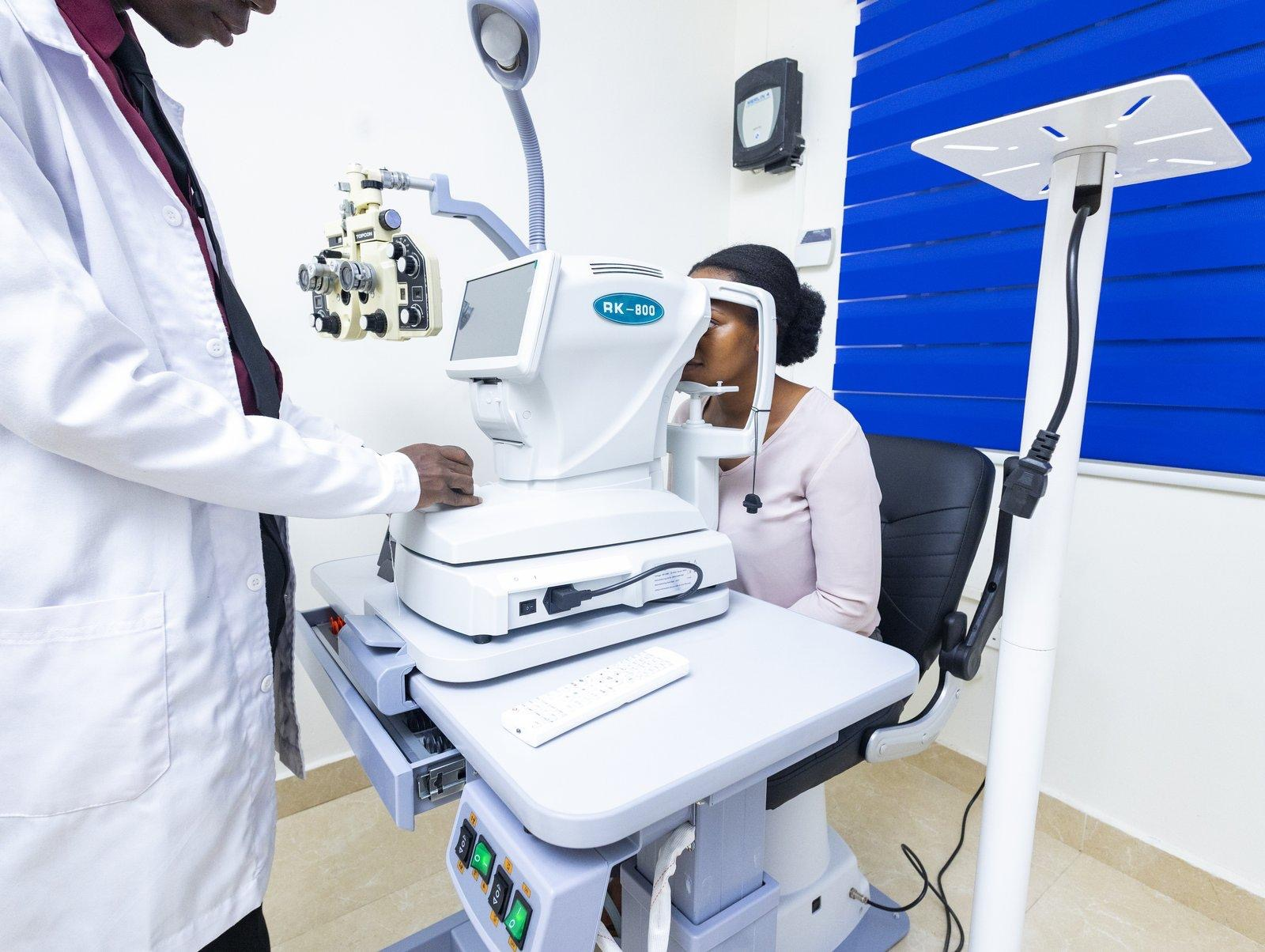
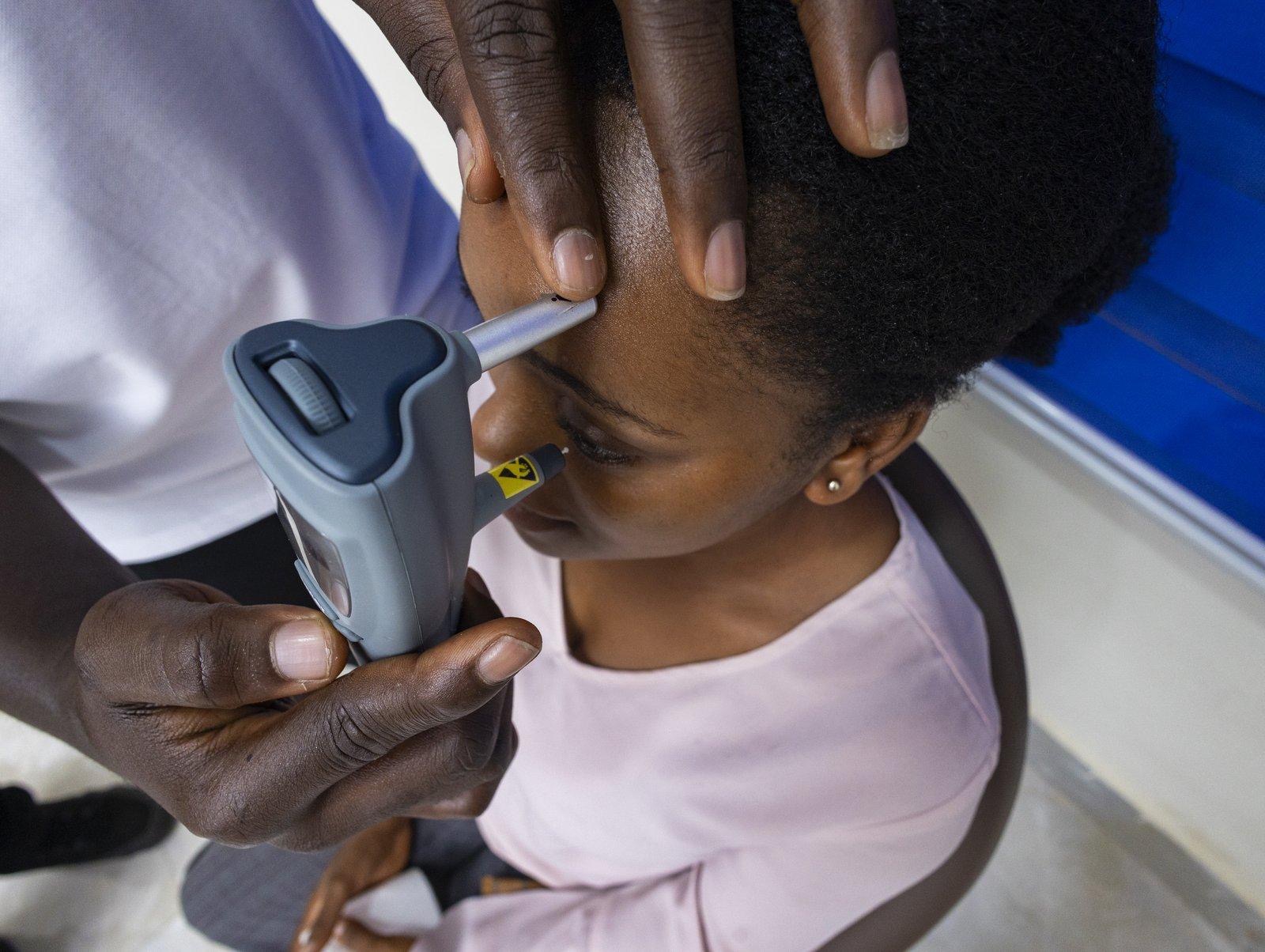
A proper eye hospital should have diagnostic equipment that goes beyond a standard eye chart. The slit lamp — the instrument you see in the image above — is one of the most important tools in ophthalmic care.
It allows a specialist to examine the front and back of the eye in detail, detecting conditions like glaucoma, cataracts, retinal damage, and corneal disease that would be missed entirely in a basic optical shop setting.
You should also look for board-certified ophthalmologists (not just optometrists), HEFRA accreditation, and NHIA coverage which allows patients on the National Health Insurance Scheme to access care. These are not just administrative checkboxes. They’re the markers of a facility that operates to a defined standard of medical accountability.
St. Thomas Eye Hospital, Right Here in Osu
St. Thomas Eye Hospital has been providing specialist eye care in Ghana since 2010, with branches across Accra, Tema, Kumasi, and Takoradi.
The Osu branch, located at 63 Anumansa Street, Osu Klottey, Accra, sits at the heart of one of the city’s most accessible neighbourhoods, close to Danquah Circle and reachable from most parts of central Accra.
Services at the Osu branch include comprehensive eye examinations, cataract surgery assessments, glaucoma screening, retina laser treatment, oculoplastic procedures, and optical coherence tomography (OCT).
The facility accepts NHIA, making specialist care accessible to insured patients without prohibitive out-of-pocket costs.
Walk-ins are welcome Monday to Saturday. For surgical consultations, it’s worth calling ahead to ensure you’re scheduled with the appropriate specialist.
A Final Word for Osu Residents
Osu is one of the most dynamic corners of Accra — and that energy has a cost on your body that most people don’t calculate until something forces them to. Your eyes are your most-used sensory organ, and they’re working overtime in one of the city’s most stimulating, most polluted, and most screen-heavy environments.
The good news: most of what can go wrong with your eyes is preventable — or at least manageable — if caught early. The worse news: early rarely feels urgent. It usually just feels like a busy week, or the Harmattan, or too many hours on your phone.
Don’t wait for it to feel serious. The slit lamp at 63 Anumansa Street has seen a lot of “I should have come in sooner” moments. You don’t have to be one of them.

Dr. Michael E. Gyasi is the Medical Director and founder of St. Thomas Eye Hospital — a multi-branch specialist facility that introduced phacoemulsification cataract surgery and micro-incisional vitrectomy surgery to Ghana. Under his leadership, the hospital has delivered over 10,000 free sight restoration surgeries and screened more than 200,000 people for eye disease across the country.
Tags :