QUICK ANSWER Botox is a brand of botulinum toxin type A, a prescription medicine that temporarily reduces the activity of selected...

Eye Infections in Ghana: Symptoms, Causes and Treatment
By Dr. Akosua Mensah-Bonsu — Consultant Ophthalmologist, St. Thomas Eye Hospital Published 15 September 2026 · 8 min read
In June 1969, an unfamiliar eye disease appeared in Accra. Eyes turned red and swollen, with visible bleeding under the surface. It spread through the city fast — at least 13,664 people were infected between June and August, across every age group.
It coincided with Apollo 11 landing on the moon. Some Ghanaians speculated the astronauts had brought something back with them. Others thought it was divine displeasure at men walking on the moon. The name stuck, and it stuck across the region.
Fifty-seven years later, we still call conjunctivitis “Apollo.”
What most people don’t know is that the 1969 Accra outbreak was the first time this disease had ever been described anywhere in the world.
It was named acute haemorrhagic conjunctivitis, spread rapidly across Africa and Asia, and became a global pandemic. Ghana didn’t catch Apollo from somewhere else. Ghana is where medicine first identified it.
That history matters for a practical reason. Because Apollo is so familiar here, almost every red eye in Ghana gets called Apollo — and treated the way people treat Apollo, which is usually by waiting it out. Most of the time, that’s fine. Occasionally it’s the reason someone loses an eye.
Here’s how to tell the difference.
The Four Kinds Of Eye Infection
Not all red eyes are the same problem, and the distinction is about which part of the eye is infected.
Conjunctivitis (Apollo) affects the conjunctiva — the thin transparent membrane covering the white of your eye and lining your eyelids. This is the common one, and usually the mild one.
Keratitis affects the cornea, the clear window at the front of the eye. This is the dangerous one. The cornea is what you see through, and any scarring on it is permanent.
Blepharitis and styes affect the eyelids and their oil glands. Uncomfortable, rarely serious.
Endophthalmitis is infection inside the eyeball itself. Rare, and a genuine emergency — untreated, it can destroy an eye within days.
Conjunctivitis and keratitis both make an eye red and sore. That’s the whole problem. To the person experiencing it, they can feel similar in the first day or two. To an ophthalmologist looking through a slit lamp, they’re not remotely similar.
Conjunctivitis: The Common One
Most conjunctivitis is viral, and most viral conjunctivitis resolves on its own.
Viral (including classic Apollo). Sudden onset of painful, swollen, red eyes with bleeding under the conjunctiva, excessive tearing, light sensitivity and a gritty foreign-body feeling — typically resolving within five to ten days without treatment. Extremely contagious. It transmits by direct contact — handshakes, hand-to-eye contact — and through shared items like handkerchiefs, towels and makeup tools.
Bacterial. Thicker, yellow or green discharge, often gluing the lashes together overnight. Usually one eye first. Responds well to antibiotic drops.
Allergic. Both eyes, intense itching, watery discharge, often seasonal or triggered by dust. Not contagious at all. Harmattan drives a lot of this in Ghana.
Apollo outbreaks still happen regularly. In 2023, the Ghana Health Service recorded 937 cases across four regions. If your eye is red during an outbreak, the odds genuinely favour ordinary conjunctivitis.
But odds aren’t certainty, which brings us to the part of this article that matters most.
Keratitis: The One That Takes Eyes
A corneal infection is a different category of problem, and Ghana has an unusually high burden of the most difficult type.
Fungal keratitis accounts for 37.6% of corneal ulcers in Ghana. For comparison, it’s around 17% in Nepal. We sit near the top of the global range.
The reason is climate and occupation. Fungal keratitis typically follows eye trauma involving vegetable matter, which puts agricultural workers at substantially higher risk. A maize leaf catching your eye while you’re clearing a field. A cassava stem flicking back. A palm frond.
Anything organic that scratches the cornea can introduce fungal spores directly into the wound.

A landmark study conducted across rural and urban eye units in Ghana and southern India examined over a thousand patients with suppurative keratitis. Filamentous fungi were the principal cause in both regions at 42%, with Fusarium and Aspergillus the commonest isolates.
In Ghana specifically, Pseudomonas was the most frequently isolated bacterial cause.
Two things make this dangerous. Fungal ulcers progress more slowly than bacterial ones, so they don’t feel like an emergency in the first few days. And they’re considerably harder to treat once established — infections of the cornea due to filamentous fungi are a frequent cause of corneal damage in the tropics and are difficult to treat.
In tropical developing countries, corneal infections are the second commonest cause of blindness after unoperated cataract. Not glaucoma. Not diabetic eye disease. Corneal infection.
How To Tell Them Apart At Home
You cannot diagnose this yourself. But you can tell when it’s stopped being ordinary.
Probably conjunctivitis:
- Redness with grittiness or itching, but not deep pain
- Vision essentially normal, or only blurry until you blink the discharge clear
- No visible spot on the coloured part of the eye
- Both eyes affected, or the second eye following within a day or two
- Improving, or at least not worsening, after 48 hours
Get seen today:
- A white or grey spot on the cornea — the single most important sign in this article
- Genuine deep pain rather than irritation
- Vision that has dropped and is staying down
- Severe light sensitivity
- One eye only, worsening steadily
- Any recent eye injury, particularly from plant material
- You wear contact lenses and your eye is red and painful
- No improvement after two days, or worsening at any point
A white spot on the cornea is what a corneal ulcer looks like from the outside. Whatever else you take from this article, take that.
Contact Lens Wearers: A Specific Warning
If you wear contact lenses and develop a red, painful eye, remove the lenses immediately and come in. Do not wait, and do not put them back in “to see if it settles.”
Lens-related corneal infections progress fast, and Pseudomonas — the commonest bacterial cause of keratitis in Ghana — is particularly aggressive in lens wearers. It can cause significant corneal damage within a day.
Never rinse lenses or lens cases with tap water, and never sleep in lenses not prescribed for overnight wear.
What Not To Do
Don’t put anything in your eye that didn’t come from a pharmacy or a clinician. Not breast milk, not urine, not plant sap, not a preparation from a healer. Beyond the direct risk, the delay is what causes the damage — patients who use traditional eye remedies take dramatically longer to reach hospital, and arrive with far worse vision.
Don’t use leftover steroid drops. This is one of the most damaging mistakes we see. Steroid drops reduce redness, so the eye looks better while a fungal or herpetic infection accelerates underneath. If you have old drops at home and don’t know exactly what they are, don’t use them.
Don’t share a treatment with someone else. Apollo spreads through households precisely this way.
Don’t wait out a one-sided, painful red eye. Conjunctivitis is usually bilateral and irritating. Keratitis is usually unilateral and painful.
Stopping The Spread

During an Apollo outbreak, hand hygiene does most of the work:
- Wash hands frequently, especially after touching your face
- Don’t share towels, pillowcases, handkerchiefs or eye makeup
- Change pillowcases and face towels daily while symptomatic
- Stay home from school or work while eyes are actively discharging
- Don’t rub your eyes, and wash your hands immediately if you do
- Discard eye makeup used during the infection
How We Treat It
Treatment depends entirely on which organism is involved, which is why examination matters more than any prescription.
Viral conjunctivitis needs supportive care — cool compresses, lubricating drops, hygiene. Antibiotics don’t work on viruses.
Bacterial conjunctivitis responds to antibiotic drops, usually within days.
Bacterial keratitis requires intensive antibiotic drops, often hourly around the clock at first, and close monitoring.
Fungal keratitis needs antifungal treatment over weeks, sometimes months. Diagnosis usually involves scraping the cornea for microscopy and culture.
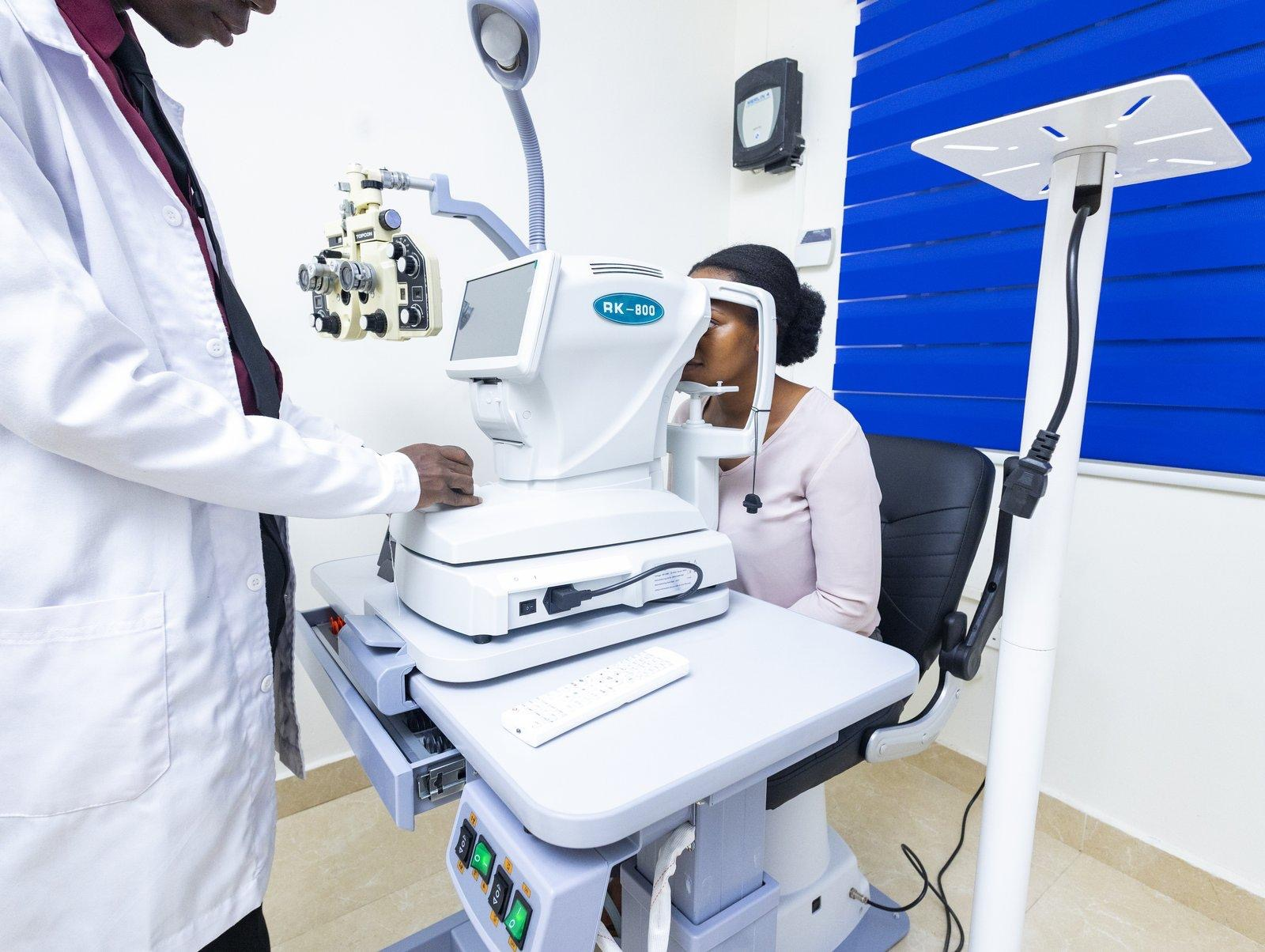
At St. Thomas, corneal assessment uses slit-lamp examination with fluorescein staining, and corneal scraping for microbiology where an ulcer is present. Where an infection has already scarred the cornea, we can assess whether corneal surgery would restore vision. See our full services.
Most eye infections are straightforward. The ones that aren’t are extremely time-sensitive, and there is no reliable way to tell which is which from your own bathroom mirror. Corneal blindness is one of the leading preventable causes of vision loss in Ghana, and almost all of it starts as something that looked minor.
Frequently Asked Questions
Is Apollo the same as conjunctivitis?
Broadly, yes. Apollo originally referred specifically to acute haemorrhagic conjunctivitis from the 1969 Accra outbreak, but in everyday Ghanaian usage it now covers most forms of conjunctivitis. Medically, the distinction still matters — bacterial and allergic conjunctivitis are treated differently from viral.
How long does Apollo last?
Viral conjunctivitis typically clears within five to ten days without treatment. If yours isn’t improving after a week, or is worsening at any point, get it examined.
Can I go to work or school with an eye infection?
Not while the eye is actively discharging. Viral conjunctivitis is highly contagious and spreads readily in classrooms and offices.
When is a red eye an emergency?
When there’s a white spot on the cornea, significant pain, dropping vision, or a recent eye injury — particularly from plant material. Also if you wear contact lenses. In these cases, come in the same day.
Does NHIA cover treatment for eye infections?
Yes. St. Thomas Eye Hospital accepts NHIA across all branches.
My child has a sticky, discharging eye. Is that serious?
It’s often ordinary bacterial conjunctivitis, but infants and young children need proper assessment because paediatric eye conditions can progress quickly. Never treat a baby’s eye with breast milk.
Book an examination
St. Thomas Eye Hospital has branches in Mataheko, Osu, Tema and Kumasi. Board-certified ophthalmologists, slit-lamp corneal assessment, and on-site microbiology. NHIA accepted.
📞 Find your nearest branch: stthomaseyehospital.com/our-branches
If you have a white spot on your eye, deep eye pain, or vision that has dropped — do not wait for an appointment. Come in today.

Dr. Michael E. Gyasi is the Medical Director and founder of St. Thomas Eye Hospital — a multi-branch specialist facility that introduced phacoemulsification cataract surgery and micro-incisional vitrectomy surgery to Ghana. Under his leadership, the hospital has delivered over 10,000 free sight restoration surgeries and screened more than 200,000 people for eye disease across the country.
Tags :